Showing posts with label recycle. Show all posts

Friday, October 10, 2014

Do NOT Throw Away That Bottle!

Recycling projects are always cool, especially when you can turn your trash into something new and useful. We’ve written posts about ways to recycle before, but it turns out there’s so much that you can do with recycle plastic bottles that we just HAD to share it on a separate post!
The PET plastic that most plastic beverage bottles are made of is a fairly useful material – it’s resilient, flexible, transparent and food safe. As such, there are probably countless applications for these bottles that will give them second lives. If you're looking for fun things to do with the kids over the weekend and love DIY projects, give this a gander and see what other ideas you can come up with!

Use Old Bottles to Organize Your Art Materials.


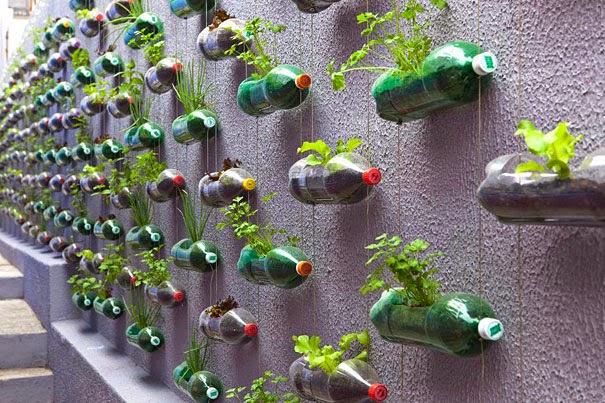
Vertical Garden, Anyone?


What About A Beautiful Chandelier of Bottle-Bottoms? 


Or, Get the Scissors Out and Make Planters!


Feed the Birds and Have A Seed Party!


In the Mood for a Challenge? Why Not Build a Boat?


There are so many ways to reuse old plastic bottles instead of letting them rot in a landfill forever. Have ideas? Share them with us!

Tuesday, October 30, 2012

An Awesome Discovery: Ekocycle!

Global music artist and producer will.i.am and The Coca-Cola Co alongside Levi's Brand MCM, RVCA and Case-Mate will join the Ekocycle brand. The Atlanta-based beverage giant announced in July a $1 million commitment and the launch of the brand with partners Beats by Dr. Dre and New Era.

The Ekocycle brand initiative aims to educate consumers about recycling, identify products that can be recycled and tout the positives of recycling. EKOCYCLE finds products, such as assorted plastic bottles and aluminum cans, that can be repurposed into recycled content for fashion-forward lifestyle products through the help of some of the industry’s hottest trendsetters.

Products from the partners include:
•Limited edition Levi’s 501 Waste Less jean, which is made with an average of eight recycled assorted plastic bottles per pair of jeans. The jeans will be available in April 2013 for $128 with global distribution via Levi’s retail doors and online at levi.com.
•Beats by Dr. Dre EKOCYCLE headphones contain 31 percent recycled material and deliver exceptional sound. They are now available online at Beatsbydre.com and global e-tailers, priced at $349.95.
•Case-Mate EKOCYCLE Barely There Case is molded from a 100 percent recycled PET -- a translucent, glossy finish that showcases more of a smartphone. It retails for $35 at Best Buy stores and the company’s website.
•New Era caps’ EKOCYCLE Cap Collection features two caps - a 59FIFTY fitted and a 9FIFTY Strapback. Both are made with a recycled fabric that consists of a traditional polyester fabric and recycled plastic. They sell for $30-45.

We support and admire people and companies who use their funds and fame for the benefit of the Earth. Check out Ekocycle today and tell us what you think!
http://www.facebook.com/EKOCYCLE

Thursday, May 6, 2010

Banned Plastic Bottles

Concord's (a town in America) Town Meeting has just approved a ban on the sales of bottled water. I do understand their concern of plastic bottles but I think it is a bit over the line right. Wouldn't it be better to instead just sell bottled water in recycled plastic and teach the community about the importance of recycling? Or better still, only sell recycled products or beverages packaged in recycled materials.

I think this would be more practical then banning plastic bottles. I mean, the production of glass requires alot of energy as well, aluminum and steel cans are made out of toxic ores extracted from the ground by mining , not to mention that mining is dangerous and the environmental costs are huge. And not as if they are banning all plastic bottles. They still allow the sales of sweet drinks in plastic bottles so people who are thirsty have no choice but to buy these unhealthy choice instead. If you want to ban it, ban it all the way.

Saturday, April 24, 2010

An Interesting Read :)

Commitment-phobes, get ready to take notes: according to the Eco-Love Survey recently conducted by Timberland, you've got a whole new category of breakup excuses at your disposal. Sure, he's tall, dark and handsome ... but he doesn't recycle? She's a high-powered blonde ... who litters? Back into the dating pool you go. In actuality, these aren't mere excuses, they're signs that environmental values are slowly trickling into yet another corner of our consciousness - the dating and mating corner. According to the Eco-Love Survey, green does matter when it comes to selecting a friend or partner:

* 56% of those surveyed wouldn't date a litter bug
* 24% would think twice about dating a non-recycler
* 20% wouldn't date the driver of a gas guzzler

The good news is, according to the 1,000 nationally representative Americans we surveyed, environmental responsibility is gaining traction as a positive character trait and something we consider when it comes to making decisions about the kind of people we want to spend time with in our personal lives. The not-so-good news is, it still doesn't matter a whole lot. When asked whether they believe environmentally-friendly women are more stylish, more sophisticated or more laid back than those who are not eco-friendly, the answer was a resounding "no", which leaves us with the mental image of an uptight, socially-inept and poorly dressed green girl, the stereotypical environmentalist you'd want as your lab partner but wouldn't dream of taking to the prom. Clearly, we've got a long way to go to bridge the gap between scorning the environmental despoilers and warmly embracing the eco-friendly. Is it that we need a better poster child for eco-chic? When asked which environmentally-friendly celebrity would most inspire them to go green, Cameron Diaz only garnered 27% of votes with Kate Hudson (26%) and Gwyneth Paltrow (21%) close behind. Is there some sort of gender bias, some kind of "guys don't make passes at girls who recycle glasses" thing going on? Sadly no, we can't even blame men for being the insensitive ones (this time). Nearly twice as many men as women surveyed believe eco-friendly girls make better life partners (24% vs. 14%).

It could just be that we're not ready to pair the notion of environmental responsibility with the "L" word because when the same survey participants were asked about the importance of eco-responsibility with no romantic strings attached, the results were a lot more encouraging. When asked which of the following environmental actions Americans need to take in the next year, they
said:

* Use energy efficient light bulbs (72%)
* Use non-toxic or non-chemical cleaners around the house (59%)
* Carpool, walk or ride bikes to work (57%)

As a company that's working hard to reduce our environmental footprint while engaging consumers who want to do the same, some of the survey results were disheartening but not enough to deter us from making beautiful (stylish, even!) durable, eco-conscious footwear for consumers who think that sort of thing matters (30%). As for the marriage between environmental values and romantic love, we'll continue to believe that that relationship, like any other, simply needs time to grow. And when it does, we'll be the first ones to throw recycled-compostable paper confetti at the happy couple.

By Margaret Morey-Reuner is the Senior Manager of Values Marketing for Timberland.

Tip of the day: Find a partner who is not really in to turning green and turn your partner into as eco-conscious individual.

Thursday, April 22, 2010

What will you be doing today?

I know for most of us, it is a working day so, us working people won't be able to go and celebrate Earth Day.

But that does not give us a reason to skip Earth Day altogether. So I suggest that we should bring Earth Day to work! Do something green at work today. Go paperless. Use less paper. Take the public transport. Walk. Cycle. Pack your own organic food. Do not do takeaway. Switch your PC or laptop off when you're in meetings or on your lunch break. Shop with your cloth bag. Bring your own reusable coffee cup when taking away your favourite coffee or latte. Make sure you switch off your electrical appliances from the main switch before leaving the house. Take a quick shower. Do not leave the tap running while brushing your teeth. Recycle. And the list goes on. So go ahead and influence your colleagues in going green! Remember to switch off the main switch by your desk as well before you head home.

Happy Earth Day!! :)

Tuesday, March 23, 2010

Eco Event in Singapore

A trade show and conference, where businesses can learn about the latest insights and best practices in the green economy will take place in April 8-10 at the Suntec International Conferenc and Exhibition Centre, Singapore. Its called the Eco World 2010.

ECO World 2010 aims to promote an environmentally friendly lifestyle through the sharing of knowledge relating to sustainable development solutions. One of the highlights of ECO World 2010 is the two-day trade conference featuring local and regional key opinion leaders, including The Carbon Neutral Company; who will be sharing green business strategies and its best practices for success. Besides the conference, ECO World 2010 will feature innovations and green solutions from the sectors of construction, lifestyle, technology and waste management. Some of the exhibiting companies include: Centre for Livable Cities, Dayen Environment Ltd, ecoWise Holdings Ltd, IBM, LHT Holdings Ltd, Spicers Paper Pte Ltd, Termimesh Singapore, Tetra Pak and The Green Car Company Pte Ltd. There will also be an international pavilion featuring sustainable solutions from Costa Rica, Mexico, Saudi Arabia, South Africa, Brazil and Spain. The rapid economic growth experienced in Asia over the last decades has exerted considerable pressure on the environmental sustainability of the region. It is estimated that almost 55%* of the population in Asia will be living in urban areas by 2030. This translates to an increase in production and consumption of energy usage and carbon dioxide emissions, as well as further degradation of scarce resources such as water supplies, forests and agricultural land.

I think this is a good direction that Singapore is taking to promote eco-friendly businesses in Singapore. I just hope that the conference itself will be eco-friendly..

Tip of the day: If you're having a party and plan to buy plastic plates and utensils, remember to buy the eco-friendly ones made out of corn or is biodegradable. If not, just rinse and recycle the disposable plates :) Its not too much work to save the Earth.

Monday, March 15, 2010

News, news and more news

I read some of the top eco news today n stumbled upon an article titled "IPCC rainforest eco-trastophe claim confirmed bunk" in the Tehran Times.

It says that the UN body came under attack for suggesting that 40% of the Amazonian rainforests (dubbed the "lungs of the planet" by some for their ability to turn CO2 into oxygen, and also seen as vital for their bio-diversity grounds) might disappear imminently. This disaster would be triggered, according to the IPCC's assessment, by a relatively slight drop in rainfall of the sort to be expected in a warming world. Scientists have made their research and now it appears that such conditions have already occurred, and the Amazonian jungles were unaffected. How long do they think the rainforest will survive when there's a constant decrease in supply of water? Do they think the rainforest will last forever? Even our regular home plants need a certain amount of water to survive.

Ok, so what if the Amazon can survive with a decrease amount of water. Good for them right. But what about the animals that depend on the water to survive? Are we suppose to just let them dehydrate and die? They are already fighting for space because of deforestation, thanks to us greedy humans who can never be satisfied, and now they have to fight for an important element which is necessary for any living organism to survive, water. The rich nations aren't the ones who will be affected by it first-hand, but the poor nations will be affected first. It's just sad that there are people out there who wants to prove those that are trying to do good for Mother Earth wrong. And why? Because of greed and money? Are these scientists implying that it is alright for the world to live with less water, a hotter climate (which they said is already happening now) and a more polluted world? That's the message I got from reading the article.

Tip of the day: Please buy only recycled paper and be proactive in recycling. It truly does help.

Tuesday, February 9, 2010

Top 100 Green DIY Skills

Honing your green skills is part of growing and learning to walk softly on the earth. How many things do you really know how to do in order to increase your green and decrease your carbon footprint? Here is a list of 100 essential skills for the green DIY-er.

Essential Food Skills

1. Read and understand product labels

2. Bake bread

3. Make your own bread starter and keep it going

4. Make cheese, yogurt, and kefir from local milk

5. Preserve food by canning

6. Preserve food by drying

7. Forage for local wild foods safely

8. Raise a couple of backyard chickens

9. Make your own tofu,tempeh, and soy milk

10. Eat locally and in season

11. Grind your own flour

12. Grow your own produce

13.Grow your own herbs

14.Grow your own sprouts

15. Blend your own herbal tea

16. Have a repertoire of vegetarian recipes you can use for various occasions

17. Fish or hunt responsibly if you eat meat

18. Make homemade pastas and other pantry basics

19. Cook a variety of foods well

20. Utilize a menu to minimize food waste

21. Throw a party without compromising your green values

22. Make Your Own Vanilla Extract

23. Sharpen kitchen knives so they last

24. Make homemade granola bars, granola, waffles, and other breakfast items

25. Make baked goods from "scratch".

26. Understand terms like, "organic", "Fair Trade", "all natural", and "GMO"

Essential Household Skills

27. Sew well enough to repair clothing

28. Sew well enough to make your own clothing and reusable shopping bags

29. Sew fitted cloth diapers for your baby

30 .Knit or crochet dishcloths

31. Know how to reupholster a chair

32. Make your own laundry soap

33. Make your own dishwasher detergent

34. Make your own house cleaning supplies

35. Use diatomaceous earth, bay leaves, and other "eco-friendly" natural pest deterrents

Home Maintenance and Repair Skills

36. Use non-electric appliances rather than electric

37. Know where to find non-electric appliances

38. Program a thermostat

39. Tile a counter top

40. Use 0 VOC paint

41. Repair a screen

42. Use a caulk gun

43. Make simple appliance repairs such as replacing belts

44. Find what you need by bartering, or using CraigsList, eBay, and thrift stores

45. Repair a leaky toilet

46. Repair a leaky faucet

47. Replace a faucet

48. Check your home for energy leaks using incense, a candle, or a device that is created for that purpose

49. Unclog a drain without using Drano or harmful chemicals

50. Insulate an attic with eco-friendly insulation

Gardening Skills

51 .Build a compost system

52. Use compost to enrich your soil

53. Plan a garden for your climate

54. Understand xeriscaping

55. Plant a multi-seasonal vegetable garden

56. Build a simple cold frame for salad all year

57. Build frames for raised bed gardens

58. Make a rainwater catchment system

59. Use a manual reel mower

60. Use companion planting methods to control pests

61.Build a bat house to encourage bats and decrease mosquitoes

62. Use predator insects like Praying Mantis to control garden pests

63. Know what heirloom seeds are and why you should use them

64. How to plant open pollinated vegetables for best yields

65. How to save seeds from your own produce

66. Plant trees and bushes to cut your energy bills

67. Use soaker hoses to conserve water

68. Sharpen and maintain tools

Health Skills

69. Know how to use herbs and natural remedies to treat common illnesses

70. Make your own soap

71. Make your own skin care products

72. Use essential oils for health and cleaning

73. Make your own deodorant

Transportation Skills

74. Tune up a bicycle and make repairs

75. Do simple maintenance on your car

76. Arrange or locate a carpool

77. Learn to use hypermiling techniques

78. Plan eco-friendly air travel

Energy Skills

79. Install exterior solar lighting

80. Install a solar panel

81. Know where to find the most eco-friendly, green power source available to you

82. Connect home electronics to power strips for easy shut off

83. Check the wattage of an appliance

84. Calculate annual kilowatt usage

Conservation Skills

85. Use email rather than conventional mail

86. Switch to a paperless office

87. Locate the local library and use it rather than buying books, DVDs, and tapes

88. Adjust your settings on the computer to make it more energy efficient

89. Use skype and other technology to limit the need for travel to conferences

90. Learn to plan eco-friendly vacations, such as camping (and leave no trace)

91. Replace a hobby with an environmentally friendly hobby

92. Locate and use recreational green spaces such as hiking trails, parks, and public gardens

93. Understand and be able to explain what cradle to cradle means

94. Understand and be able to explain what carbon emissions are

95. Understand and be able to calculate a carbon footprint as well as explain what it is

96. Know where to recycle technological items like computers, microwaves, televisions etc.

97. Identify and sort a variety of recyclable materials

98. Know where reusable items can be substituted for disposables

99. Understand and be able to explain cap-and-trade

Do you agree with all of those? Are there others that you feel are important? Let us know your thoughts!

Friday, January 29, 2010

I live without cash – and I manage just fine

Armed with a caravan, solar laptop and toothpaste made from washed-up cuttlefish bones, Mark Boyle gave up using cash....

In six years of studying economics, not once did I hear the word "ecology". So if it hadn't have been for the chance purchase of a video called Gandhi in the final term of my degree, I'd probably have ended up earning a fine living in a very respectable job persuading Indian farmers to go GM, or something useful like that. The little chap in the loincloth taught me one huge lesson – to be the change I wanted to see in the world. Trouble was, I had no idea back then what that change was.

After managing a couple of organic food companies made me realise that even "ethical business" would never be quite enough, an afternoon's philosophising with a mate changed everything. We were looking at the world's issues – environmental destruction, sweatshops, factory farms, wars over resources – and wondering which of them we should dedicate our lives to. But I realised that I was looking at the world in the same way a western medical practitioner looks at a patient, seeing symptoms and wondering how to firefight them, without any thought for their root cause. So I decided instead to become a social homeopath, a pro-activist, and to investigate the root cause of these symptoms.

One of the critical causes of those symptoms is the fact we no longer have to see the direct repercussions our purchases have on the people, environment and animals they affect. The degrees of separation between the consumer and the consumed have increased so much that we're completely unaware of the levels of destruction and suffering embodied in the stuff we buy. The tool that has enabled this separation is money.

If we grew our own food, we wouldn't waste a third of it as we do today. If we made our own tables and chairs, we wouldn't throw them out the moment we changed the interior decor. If we had to clean our own drinking water, we probably wouldn't contaminate it.

So to be the change I wanted to see in the world, it unfortunately meant I was going to have to give up cash, which I initially decided to do for a year. I got myself a caravan, parked it up on an organic farm where I was volunteering and kitted it out to be off-grid. Cooking would now be outside – rain or shine – on a rocket stove; mobile and laptop would be run off solar; I'd use wood I either coppiced or scavenged to heat my humble abode, and a compost loo for humanure.

Food was the next essential. There are four legs to the food-for-free table: foraging wild food, growing your own, bartering, and using waste grub, of which there is loads. On my first day, I fed 150 people a three-course meal with waste and foraged food. Most of the year, though, I ate my own crops.

To get around, I had a bike and trailer, and the 34-mile commute to the city doubled up as my gym subscription. For loo roll I'd relieve the local newsagents of its papers (I once wiped my arse with a story about myself); it's not double-quilted, but I quickly got used to it. For toothpaste I used washed-up cuttlefish bone with wild fennel seeds, an oddity for a vegan.

What have I learned? That friendship, not money, is real security. That most western poverty is of the spiritual kind. That independence is really interdependence. And that if you don't own a plasma screen TV, people think you're an extremist.

People often ask me what I miss about my old world of lucre and business. Stress. Traffic jams. Bank statements. Utility bills.

Well, there was the odd pint of organic ale with my mates down the local.

Mark Boyle is the founder of The Freeconomy Community.

Tuesday, January 26, 2010

Are You Ready To Go Solar At Home?

Solar panels have never been cheaper. How to tell if your house is a good fit.
You recycle, you buy organic, and you drive a hybrid car. What's next if you've got greenbacks burning a hole in your pocket and you want to spend them on something green?

Get your house some solar panels. Soon you will smile with glee as you slash the amount of money you fork over to the electric company every month, while reveling in the satisfaction that your home is producing its own zero-emissions power.

Solar panel prices have plunged by half in the past year as manufacturers have opened new plants, ending a multi-year shortage of silicon for photovoltaic chips. That glut will be bad for manufacturers' profit margins, but good for you. For SGD 20,937 (USD15, 000) installed, a 3.5 kilowatt system could generate 5,000 kwh of electricity a year, about a third of most homes' needs.

And if your time horizon is long enough, your homemade solar power won't cost any more than what you pay the power company. Currently the US federal government gives a 30% investment tax credit, and assuming that one can finance a solar system at the going mortgage rate of around 5%, over 20 years his/her solar power will cost between 10 cents and 13 cents per kwh.

Costs will be even lower if you can finance the system yourself with cash you have sitting around collecting 0.1% interest in a money market fund. John Berger, chief executive of Houston-based solar installer Standard Renewable Energy, maintains that because many additional state and local green energy incentives will run out of money or expire by the end of next year, there's never been a better time to install a solar system.

You've heard of smart meters? When your solar system is installed you get a genius meter that shows how much power your solar panels are generating, how much power your house is drawing from the electric utility and (if you're really power-frugal) how much power you're sending back to the grid. Lazy summer day? Grab a beer and watch the metering levels flip around as clouds wander over your neighborhood and block the sun for a few minutes.

Looking for a last-minute Christmas gift for the high-tech early-adopter nerd in your life who has everything? Solar panels are better on the environment than a new high-def TV, less annoying than a robotic dog and probably about as much fun to drive as an all-electric car (kidding). There are some caveats: Panels don't work if you have a big tree blocking the sun. And in some of your more uptight (i.e., "nicer") neighborhoods, the local spy agency (i.e., homeowners association) won't let you install them.

Wednesday, December 2, 2009

Siberia melting away

If you live in a developed country, you're pretty well insulated from climate change. Shifts in weather patterns, heavier rainfall, gradually rising sea levels and temperature increases - at the moment western society absorbs these changes without us really noticing much difference. But for the indigenous peoples of the arctic who live on one of the front lines of climate change, such shifts in the planet's behaviour are much more obvious.

The Nenets people of the Yamal peninsula are nomadic reindeer herders who live within the Arctic circle on the northern coast of Siberia. In summer they graze their herds on the tundra of the peninsula, and in winter as the ground freezes they move south to milder parts of the Siberian steppes. They use the frozen surface of the landscape to cross the large rivers that criss-cross the peninsula. But things are changing.

The arctic is the most sensitive area of the planet to climate change. While the global average temperature has risen by around 0.8 degrees, some parts of Siberia have warmed by as much as five or six. And so the Nenets have noticed the freeze is happening later and later in the year. The reindeer herders have to wait longer and longer before they can move their animals south across frozen ground.

Here, on the frontiers of the world, the warming of Siberia is already threatening a way of life that has remained fairly constant for thousands of years. It's not only that the Nenets have to move later in the year - many of the freshwater lakes that dot the landscape are leaking away as the frozen walls of earth that contain the water melt, and collapse. And so the Nenets are also losing the fishing that provides one of their main sources of food.

Eternal ice
Siberia is a landscape that's underpinned by frozen ground called permafrost, but this ground is beginning to thaw. Off the coast, the coastline and even whole islands made of permafrost are vulnerable to an Arctic sea that is increasingly turbulent as sea ice also disappears. The sea is literally washing away the melting land. Melting permafrost is causing roads, pipelines and foundations to collapse across the country. Every year, there's an increase in the area of ground that melts in summer and the area that doesn't refreeze in winter.

This isn't just a problem in the arctic. This melt has global implications, because it's going to speed up climate change. Permafrost is like a giant frozen compost heap - full of dead plants, animals, trees and other carbon-rich organic matter, and in places it reaches 1500m deep. While it stays frozen, that carbon is locked up in the ground. But as the arctic warms and the permafrost thaws, microbes start to break down that organic matter, releasing carbon dioxide and methane into the atmosphere.

Flaming lakes
Methane is a potent greenhouse gas - probably causing, tonne for tonne, around 25 times more global warming over a hundred years than carbon dioxide. By lighting escaping methane, scientists can capture dramatic images of plumes of flame bubbling up through holes cut into Siberian lakes.

Melting permafrost is releasing additional emissions of greenhouse gases into the atmosphere, accelerating climate change. Permafrost contains massive amounts of carbon - probably about twice what's currently in the atmosphere, and about five times more than all greenhouse gases we've released by burning fossil fuels. While we don't have a really clear understanding of how much carbon might be released as the permafrost melts, it's fair to say that any extra greenhouse gases in the atmosphere from melting permafrost are bad news.

Because of the melting permafrost, what happens in the arctic doesn't stay in the arctic. And so we need strong political action from world leaders at Copenhagen. We need to control the warming that's leading the arctic to melt away. It's probably too late to stop climate change ending the Nenets' traditional way of life for good. But if we don't act now, that's going to be the case for pretty much everyone.

Monday, November 30, 2009

Mount Everest to host Nepal cabinet meeting

Nepal is to hold a cabinet meeting on Mount Everest to highlight the threat global warming poses to glaciers.

On 4 December prime minister Madhav Kumar Nepal and those politicians physically fit enough will ascend 17,192ft (5,250m) to base camp. In October the Maldives held a cabinet meeting underwater to warn of the effect of rising sea levels.

This meeting, to be held before the Copenhagen climate conference, aims to highlight Himalayan glacier melt. With ice in the region melting at a rapid rate, lakes have been formed which could flood nearby villages.

Melted ice and snow also makes mountaineering routes more hazardous. At such a high altitude health is a major concern, so a team of doctors will accompany the politicians. They will fly to Everest's only airstrip, Lukla. Doctors will make a final health assessment before a helicopter takes the cabinet to base camp, at the foot of Everest. Once there they will hold a brief outdoor meeting.

Mount Everest is the highest point on earth, with a summit 29,035 ft (8,850 m) above sea level.

Friday, November 27, 2009

Amazon summit in Brazil

Brazil is hosting a regional summit to discuss climate change and ways of tackling deforestation in the Amazon.

Delegates from eight nations who share the Amazon basin, as well as France which has an overseas department there, have been holding talks in Manaus. They are discussing Brazil's plan on slowing deforestation with the financial help from rich nations.
The meeting comes ahead of a global summit on climate change in Copenhagen, Denmark, next month. Brazilian President Luiz Inacio Lula da Silva is chairing the one-day summit. Delegates from Bolivia, Colombia, Ecuador, Guyana, Peru, Venezuela and Surinam, are attending, while French President Nicolas Sarkozy is representing French Guiana.

'Ambitious message'

Presidents Sarkozy and Lula said richer nations must increase their aid to help the poorer countries fight global warming. "The poor need to be supported without any country giving up its sovereignty," President Lula said.

The BBC's Paulo Cabral reports from Manaus that for the past few days diplomats have been negotiating a common position to be presented by the Amazon countries and France at the conference in Copenhagen. He says most of the presidents invited did not come to Manaus, though diplomats say that the ministers and ambassadors sent in their place are in position to close a deal. Mr Lula's spokesman said the Brazilian leader hoped that the talks would yield "an ambitious message on issues of great relevance to the region".

"Brazil believes it is crucial for the [Amazon] region to have a converging and co-operative participation," AFP news agency quoted the spokesman as saying. Brazil is proposing to combat deforestation in the Amazon basin with financial backing from wealthy nations. "Let no gringo [foreigner] ask us to let an Amazonian starve to death under a tree," Mr Lula said in a speech ahead of the meeting. "We want to preserve [the forest], but [other countries] have to pay for that preservation."

At the summit, the Brazilian government was expected to present its efforts to reduce destruction in the Amazon as a key part of its strategy to combat climate change. Earlier this month, Brazil's government said the rate of deforestation in the Amazon had dropped by 45% - and was the lowest on record since monitoring began 21 years ago. It said that just over 7,000 sq km (2,700 square miles) had been destroyed between July 2008 and August 2009. Brazil is seeking an 80% reduction in the deforestation rate by 2020.

The environmental group Greenpeace has welcomed the latest drop but says there is still too much destruction in the rainforest. Earlier this month, Brazil said it aimed to cut its carbon emissions by at least 36% below 1990 levels by 2020.

Thursday, November 26, 2009

Obama to vow greenhouse emissions cuts in Denmark

Putting his prestige on the line, President Barack Obama will personally commit the U.S. to a goal of substantially cutting greenhouse gases at next month's Copenhagen climate summit. He will insist America is ready to tackle global warming despite resistance in Congress over higher costs for businesses and homeowners.

Obama will attend the start of the conference Dec. 9, a week from next Wednesday, before heading to Oslo to accept the Nobel Peace Prize. He will "put on the table" a U.S. commitment to cut emissions by 17 percent over the next decade, on the way to reducing heat-trapping pollution by 80 percent by mid-century, the White House said.

Cutting U.S. carbon dioxide emissions by one-sixth in just a decade would be likely to hike energy bills, but the administration says there would be important health trade-offs. Slashing carbon dioxide emissions could save millions of lives, mostly by reducing preventable deaths from heart and lung diseases, according to studies published this week in The Lancet British medical journal.

The White House said Obama's decision to attend the international conference in Denmark was "a sign of his continuing commitment and leadership to find a global solution to the global threat of climate change." But Obama's stopover on the conference's second day — instead of later when negotiations will be most intense and when most other national leaders will take part — disappointed some European and U.N. climate officials, as well as some environmentalists. Others said Obama's personal appeal will resonate with the delegates from more than 75 countries and help reset the U.S. image on the climate issue after eight years in which the Bush administration staunchly opposed mandatory reductions in greenhouse gases.

The president's first trip to Copenhagen — just last month — was less than fruitful. He made an unsuccessful pitch for the 2016 Summer Olympics to be held in Chicago. Obama's participation had been in doubt since it became clear that the Dec. 7-18 conference was unlikely to produce a binding agreement, The original goal of the conference was to produce a new global climate change treaty to replace the 1997 Kyoto Protocol. But in recent weeks it became clear that delegates were likely to produce at best an outline for an agreement to be considered late next year. Administration officials don't want to repeat the mistake of Kyoto, when the U.S. agreed to emission reductions but never implemented them because of strong political opposition at home. The U.S. never ratified the Kyoto agreement.

Most environmentalists hailed Obama's decision to go to Copenhagen, even if it's early in the conference. They said it will help set the tone of the talks and reverse America's image internationally on climate change. Said Michael Oppenheimer, a professor of geoscience and international affairs at Princeton University: "The U.S. has stood as the bad guy for so long that it's critically important for the U.S. president to set the tone for the meeting." But Kyle Ash, climate policy adviser for Greenpeace USA, said Obama should be even more involved, and later in the conference. "The Copenhagen climate summit is not about a photo opportunity. It's about getting a global agreement to stop climate chaos. President Obama needs to be there at the same time as all the other wold leaders," he said.

Tuesday, November 17, 2009

Not enough time for climate change deal?

China and the US say there isn't enough time left to agree a legally-binding agreement on climate change this year.

Charlie Kronick, senior climate advisor at Greenpeace, argues that the vast majority of countries signed up to the convention are still clamouring for an agreement with
188 countries still wanting a deal in Copenhagen....

Radio Link

Monday, November 16, 2009

World Food Summit Opens Amid Charges It May Be ‘Waste of Time’

World leaders start a United Nations summit on food security in Rome today that international aid agencies say may be a “waste of time” because it won’t commit donors to provide more money to end world hunger.

A draft of the final declaration for the Nov. 16 to Nov. 18 “World Summit on Food Security,” promises no new financial commitments. Governments will “reinforce all our efforts” to halve the number of hungry by 2015, it says, and rich nations should reverse the decline of aid dedicated to agriculture, which fell from 19 percent in 1980 to 3.8 percent in 2006.

Jacques Diouf, who is hosting the meeting as director general of the Food and Agriculture Organization, has urged governments to invest $44 billion a year to end chronic hunger suffered by 1.02 billion people and achieve “food security.” World hunger has continued to rise even with food prices falling from their peaks of last year, which coincided with FAO’s previous summit where donors pledged $11 billion in aid.

The lack of new funding requests prompted two aid agencies, Oxfam and ActionAid, to say on Nov. 12 the summit may be a “waste of time and money,” and that “governments are at risk of throwing away a great chance” to reduce the number of hungry. Francisco Sarmento, ActionAid’s food rights coordinator, called the declaration “just a rehash of old platitudes.”

Sixty heads of state and government plan to attend the meeting, which Pope Benedict XVI and UN Secretary-General Ban Ki-Moon will address, FAO said.

Previous Crisis

Last year’s surge in food prices sparked riots in more than a dozen countries from Ivory Coast to Haiti, where the unrest prompted the dismissal of Prime Minister Jacques Edouard Alexis.

Prices for wheat, which supplies about 20 percent of food calories consumed in the world, more than doubled between the start of 2007 and a peak in March 2008. Soaring energy prices boosted costs of fertilizer and transport while also lifting demand for grain-based alternative fuels like ethanol.

Today’s summit opens as the Rome-based UN agency predicts world cereal stocks will expand by about 4 million metric tons to 509 million tons next year, the highest level since 2002. Saudi Arabia has agreed to pay the $2.5 million cost of the gathering.

The Group of Eight nations, at a July summit in L’Aquila, Italy, approved $20 billion in aid over three years to help farmers in developing nations grow and sell food.

‘Summit Fatigue’

“My biggest concern is that we have to make sure that there is no summit fatigue,” Abdolreza Abbassian, a senior FAO economist, said in an interview. “If FAO felt there was a need for another summit, it is probably because it felt that the previous ones haven’t achieved what they were supposed to.”

Ertharin Cousin, U.S. Ambassador to the UN agencies in Rome, says the international community should use the summit as an opportunity to redefine how rich and poor countries work together to boost food production and cut poverty.

“When there is an opportunity, you don’t say ‘it is just another summit,’ you say ‘OK we are having this, how do we make it add value,’ and that was our goal,” the ambassador said in a Nov. 10 interview.

Developing countries must design their own plans and donor nations must work with them as partners, Cousin said.

“For us to suggest at the global level that we can have a patterned answer that is going to resolve all the issues on the entire continent of Africa of 54 countries is far too simplistic and very naĂŻve,” she said.

Private Sector Role

At a FAO-organized meeting with food and agriculture companies, including Nestle, Unilever, and Bunge Ltd., in Milan on Nov. 12-13, private sector officials pledged to increase investment in farming in poor countries.

“We stand ready to invest meaningfully to help build national capacities in applied agriculture and food systems research and technology transfer in developing countries,” the companies said in a statement after the meeting.

Foreign direct investment in agriculture tripled to more than $3 billion since 2000, FAO said in report on its Web site.

Oxfam and ActionAid say the best way to reduce the number of hungry is to target resources on small farming families, who make up a third of the world’s population, FAO estimates.

Hunger Frontline

“Smallholder farmers, mostly women, are on the frontline in the fight against world poverty, hunger and climate change and we must not continue to ignore them,” said Frederic Mousseau of Oxfam.

While increased cereal production has slowed the rise in global food prices, Abbassian of FAO predicts future shortages and price hikes.

“The one certainty is that there will be a food crisis, and the reason is simple: we haven’t done much to prevent such a thing from happening,” he said. “We have talked a lot, we have committed a lot, but we haven’t really acted.”

Saturday, November 14, 2009

How to Be Green: Dishwashers

Water, energy, and and often chemicals are involved in the act of washing dishes. Increasingly, so is a dishwashing machine. To stay out of hot water with your dishwashing habits, you wash and we'll dry with our dishwasher tips!

Top Tips for Greening Your Dishwashing

Check Your Habits: As usual, going green starts with a re-evaluation of what we take for granted. For example, by using fewer dishes and utensils over the course of the day, you will end up doing fewer loads in the dishwasher, saving energy, water, and detergent. Of course, you could sometimes wash your dishes by hand.

Wash Wisely: The most efficient way to use your dishwasher includes waiting until you have a full load and then running it at off-peak hours, not pre-rinsing the dishes in the sink, using an earth-friendly cleaning product, and allowing the dishes to air dry.

Shop Around: Which dishwasher you buy and use naturally plays a role in the greenness of your kitchen. To find the right machine for you, check Energy Star ratings and look into compact dishwashers.

Did You Know?

- 80% of the energy used by dishwashers goes to heating hot water
- The amount of water saved by using a fully loaded dishwasher, without pre-rinsing, in relation to the water consumed by hand-washing all of those dishes: 35%
- 400 gallons of water can be saved each month by running your dishwasher only when it is full

Thursday, November 12, 2009

Punggol Waterway to have eco-friendly features

Singapore's first public housing project along the Punggol Waterway will have eco-friendly features and resort-like designs.

The 1,200-unit waterfront project will be launched in the middle of next year. The firm behind the winning design is a partnership between international architectural firm Group8asia and local design company Aedas.

They stole the crown with a distinctive sky terrace concept which creates public spaces along the waterway. More than 100 design firms from Europe and Asia took part in the Punggol Waterfront Housing Design Competition. They had to submit plans that matched the housing board's theme of "Green Living by the Waters".

HDB said the waterfront flats will be kept affordable. National Development Minister Mah Bow Tan said: "New HDB estates look like private condominiums, but don't cost as much as private condominiums.

"New innovative construction methods like pre-fabrication reduces cost and construction time. And that's one of the reasons why we are able to keep the cost of construction down."

Monday, November 9, 2009

Japan planning solar station in space!

It may sound like a sci-fi vision, but Japan's space agency is dead serious: by 2030 it wants to collect solar power in space and zap it down to Earth, using laser beams or microwaves.

The government has just picked a group of companies and a team of researchers tasked with turning the ambitious, multi-billion-dollar dream of unlimited clean energy into reality in coming decades. With few energy resources of its own and heavily reliant on oil imports, Japan has long been a leader in solar and other renewable energies and this year set ambitious greenhouse gas reduction targets.

But Japan's boldest plan to date is the Space Solar Power System (SSPS), in which arrays of photovoltaic dishes several square kilometres (square miles) in size would hover in geostationary orbit outside the Earth's atmosphere. "Since solar power is a clean and inexhaustible energy source, we believe that this system will be able to help solve the problems of energy shortage and global warming," researchers at Mitsubishi Heavy Industries, one of the project participants, wrote in a report.

"The sun's rays abound in space."

The solar cells would capture the solar energy, which is at least five times stronger in space than on Earth, and beam it down to the ground through clusters of lasers or microwaves. These would be collected by gigantic parabolic antennae, likely to be located in restricted areas at sea or on dam reservoirs, said Tadashige Takiya, a spokesman at the Japan Aerospace Exploration Agency (JAXA).

The researchers are targeting a one gigawatt system, equivalent to a medium-sized atomic power plant, that would produce electricity at eight yen (cents) per kilowatt-hour, six times cheaper than its current cost in Japan.

The challenge -- including transporting the components to space -- may appear gigantic, but Japan has been pursuing the project since 1998, with some 130 researchers studying it under JAXA's oversight. Last month Japan's Economy and Trade Ministry and the Science Ministry took another step toward making the project a reality, by selecting several Japanese high-tech giants as participants in the project. The consortium, named the Institute for Unmanned Space Experiment Free Flyer, also includes Mitsubishi Electric, NEC, Fujitsu and Sharp.

The project's roadmap outlined several steps that would need to be taken before a full-blown launch in 2030. Within several years, "a satellite designed to test the transmission by microwave should be put into low orbit with a Japanese rocket," said Tatsuhito Fujita, one of the JAXA researchers heading the project.

The next step, expected around 2020, would be to launch and test a large flexible photovoltaic structure with 10 megawatt power capacity, to be followed by a 250 megawatt prototype. This would help evaluate the project's financial viability, say officials. The final aim is to produce electricity cheap enough to compete with other alternative energy sources.

JAXA says the transmission technology would be safe but concedes it would have to convince the public, which may harbour images of laser beams shooting down from the sky, roasting birds or slicing up aircraft in mid-air. According to a 2004 study by JAXA, the words 'laser' and 'microwave' caused the most concern among the 1,000 people questioned.

Saturday, November 7, 2009

2009 MTV Europe Music Awards

Music industry leaders find time for charity too.

Major celeb-packed events like the EMAs are not exactly light in the consumption department. To put it in perspective, we're talking 600 false eye lashes, more than 25 different glitters, 60 eye shadows, 300 nail polishes, 20 pots of loose powder, 200 powder puffs, and 125 different shades of lipstick to get those faces in the limelight alone, reports Reuters.

The arena, which boasts an energy-efficient design, 400 bicycle stands, and a bicycle rental service, does have vocal green efforts. And while it would be better to ban the bottled water, staff will recycle the 24,000 bottles of water artists, crew and guests were predicted to drink on site during the event.

With precision-highlighted curly locks flying in the wind machine, Beyoncé Knowles cleaned up at the 2009 MTV Europe Music Awards (EMAs), held at Berlin's O2 World arena. From four nominations, the 28-year-old Knowles took home three coveted awards: Best Female, Best Song, ("Halo") and Best Video, ("Single Ladies (Put A Ring On It)"). The Houston, Texas native gave a shout-out to hubby Jay-Z for "putting a ring on it" and a gushing thank you to friend and fellow nominee for Best Female, Shakira.

Now U2: Were the Environmentalists in the House; despite a tour said to have the same carbon footprint as a trip to Mars, U2 was probably the most environmentally active group in the house. The Irish rockers landed Best Live Act and gave a free show at the Brandenburg Gate the same night. With organic clothing company Edun, launched by Bono and his wife Ali Hewson to drive trade into Africa. Bono also wears recycled clothing, combats HIV/AIDS, and fights poverty and pushes for trade reform with One, the global activist organization he co-founded. Take that Beyoncé!