Friday, October 15, 2010

Green Cleaners' Home Cleaning Products Launched!


Green Cleaners is excited to launch our new range of healthy home cleaning products!

Our products are respectful to the aquatic life, meet strict biodegradability standards and reduce packaging with our revolutionary concentrate concept.


Why buy concentrate? SAVE, SAVE, SAVE!

Our ultra-concentrate formula will make more than 20 litres of diluted product. This means we can reduce our packaging, transportation footprint and plastic usage, whilst you save $$$$’s with cost effective cleaning solutions!

We are working hard to help protect our planet. Together we can make a difference.

Purchase online today at http://greencleaners.asia/products.asp

Wednesday, October 13, 2010

How air-conditioning is baking our world

US homes use as much electricity for air conditioning as the whole of Africa, claims a new book by Stan Cox.

When you think of the causes of global warming, you may picture an SUV before you picture a central AC unit. But almost 20 percent of electricity consumption in U.S. homes goes to AC -- that's as much electricity as the entire continent of Africa uses for all purposes. So says Stab Coxin his new book, Losing Our Cool: Uncomfortable Truths About Our Air-Conditioned World (and Finding New Ways to Get Through the Summer).

Cox, a scientist and agricultural researcher who lives in Salina, Kansas, doesn't paint AC as the bogeyman. Rather, he makes the point that our world has developed in many unsustainable directions overall, and air-conditioning has been a crucial part of that development. He also argues that making air-conditioners and other appliances more energ efficient isn't going to get us out of this mess. He was interviewed last week about his new book. Open a window, undo a button, and enjoy ...

Q. Why did you write a book on air-conditioning?

A. In the past half-century, a number of big, energy-guzzling technologies have really changed our lives: automobiles, computers, television, jet aircraft. All that time, air-conditioning has been humming away in the background, like a character actor you see in a whole bunch of movies. It's never the star, but it always seems to be there moving the plot along.

When I looked at the doubling in the amount of electricity used for air conditioning homes in this country just since the mid-90s, I thought, we really need to address this, because it is a big contributor to greenhouse-gas release and it's going to increase the likelihood that we're going to have longer, more intense heat waves and hotter summers in the future, and we're going to have to be running the air-conditioning even more.

Q. That seemed to be a theme throughout the book -- that the use of air-conditioning leads to a cycle where it needs to be used more.

A. Yes, the biggest example of that is probably global warming. But there are a lot of ways in which air-conditioning creates need for itself, including by eroding our heat tolerance. Once we've built office buildings and commercial buildings on the assumption of air-conditioning, then we pretty much have to use it. We've created a lot of space that's almost uninhabitable without it. In many buildings, the windows don't open at all anymore.

In the book, I put a lot of emphasis on what's known as the adaptive model of comfort. It's based on surveys of people who are working at different temperatures and asked if they're comfortable. People can psychologically adjust to buildings that are cooler in the winter and warmer in the summer. The comment I've heard most since the book came out is from people who work in offices and complain that their offices are too cold in the summer, and they have to take sweaters or use space heaters, wasting even more energy. Without eroding people's working conditions or quality of life at all, there could be a big savings there.

Q. I thought it was interesting that you linked AC to obesity, in the sense that people are indoors more often and their bodies don't have to work to adjust to the temperature changes during the year.

A. Right, that's one of the hypotheses that a group of medical researchers came up with to explain the rise in obesity -- the slower burning of energy by the body in the comfort range, where it doesn't have to work to either shed heat or generate heat (in addition to the normal explanations that people are eating more and exercising less). Another way AC could be affecting obesity is that people tend to eat more when in cooler conditions. And also, by making the indoors more attractive in the summertime, we've made it less likely that people are going to be outdoors where we're more physically active.

The book, Losing Our Cool: Uncomfortable Truths About Our Air-Conditioned World (and Finding New Ways to Get Through the Summer), is available on Amazon.cpm

Monday, October 11, 2010

Three receive prestigious environment award

Three President’s Award for the Environment were given out in Singapore on Friday at the Istana by President S R Nathan.

The recipients are Hitachi Global Storage Technologies (GST) Singapore Pte Ltd, Nan Hua High School, and Singapore Polytechnic.

The award is the highest accolade in Singapore that recognises individuals, organisations and companies for their significant contributions to Singapore’s efforts in achieving environmental sustainability.

Hitachi Global Storage Technologies Singapore’s real estate site operations director Tan Puey Hwee said: "We notice that a lot of times the office air—conditioning is very cold, but employees are complaining it’s very hot because they’re all wearing jackets.

"So with support from the management, we have adjusted the temperature over time, so now a lot of employees are not wearing jackets in the office, while the temperature is set at a comfortable level".

The company’s all—round effort has earned it the prestigious environmental award, together with Nan Hua High School and Singapore Polytechnic. This is the first time the five—year—old award is going to a polytechnic. The polytechnic’s efforts in going green include planting more trees, building a block out of re—cycled material, and installing motion sensoring devices that can dim lights. Singapore Polytechnic principal Tan Hang Cheong said: "We are going through a programme of retrofitting.

"Our buildings, many of them are 20, 30 years old, so we are gradually trying to improve. "So when we remodel the classroom, remodel the lecture theatres, we will introduce all these energy—saving devices within the buildings". Next year, the school will also introduce a module on the environment for every student to become environmentally aware.

Thursday, October 7, 2010

Money could grow on trees, depending on carbon price

Giving trees a value is one solution for halting deforestation, but deciding how much a forest is worth is proving challenging. Reducing emissions from deforestation and forest degradation, otherwise known as REDD, offers vast potential for companies, developing nations and native forests. But its viability is threatened by the absence of a liquid market and a clear signal by policymakers on how REDD would be funded.

For now, REDD credits are not included on Europe’s emissions trading scheme, the world’s largest carbon-trading system. And while several REDD projects are getting closer to selling their credits on the voluntary market, those hoping to benefit from the scheme say most investors are not willing to bear the risks just yet.
“We’ve found some buyers that have been willing to pre-pay for credits,” said Todd Lemons, the CEO and chairman of for-profit conservation company Infinite Earth. But despite interest from investment funds that he says have earmarked “billions” specifically for REDD, none have invested in the company’s Indonesia project. Hong Kong-based Infinite Earth is part of the EnVision group, which develops natural resource projects for profit. The company was created in 2008 to develop the Rimba Raya Reserve, a 90,000-hectare peat swamp forest in Central Kalimantan.

Lemons said the reserve will serve as a buffer against palm oil plantations encroaching on the neighboring national forest, home to rare flora and fauna, such as Bornean orangutans. An Indonesian company is listed as the project owner.
Since its start, Infinite Earth has pooled more than $3.5 million from international private investors, such as Shell Canada and the Clinton Foundation, to fund the project’s development. They received the first signal that their investment was making headway in August, when Infinite Earth’s method for calculating carbon credits from forestry projects was approved under the Voluntary Carbon Standard.
Few methodologies have lined up to undergo VCS’s approval process, which requires double validation from two separate auditors.

Infinite Earth’s was the first international REDD methodology the VCS fully approved, and on September 22 a reforestation project in Tanzania became the first forestry investment to earn carbon offsets after credits were issued and placed in the VCS registry.

The news is drawing attention from investors reluctant to make the foray into forest-carbon trading. Forestry projects have already been operating on other registries, such as California’s Climate Action Registry, but project experts say VCS is the most credible standard. Once a forestry project begins trading there, it could open the door for REDD to be included in the UN-based compliance market.
If that happens, it could unleash billions of dollars toward climate change mitigation efforts.

The Rimba Raya project alone could create around 75 million credits, or offsets, by avoiding the release of carbon that results when peat swamp forests are converted for agriculture (this is based on the idea that one metric tonne of CO2 equals one credit). Given today’s average UN-certified carbon price at between 10 to 15 Euros per credit, those credits could add up 1.1 billion Euros million in potential revenues.

For now, however, Infinite Earth has pre-sold only 10 percent of its credits, and at a price well below the US$10 a tonne needed to guarantee returns to investors.
And while Infinite Earth has bid its time through the verification process, unclear regulations and the months or even years companies must wait before they can issue offsets have dampened enthusiasm.

Most prefer to wait until the market gains some certainty. Without a formal exchange to publish information about buying and selling, few buyers can determine the true value of an offset, and there is no way to ensure credits are not being sold more than once.

Wednesday, October 6, 2010

4 Energy Technologies That Could Replace Oil and Coal

New large-scale projects are revolutionising the energy sector, using sunlight, wind, waves and even trash, rather than oil, coal or nuclear power. This weekend, US President Obama toured the BrightSource project, which will be the largest solar-thermal plant in the world.

Every time there's an energy-related disaster, it boosts the prospects for clean alternatives. The devastating explosion at the Upper Big Branch coal mine killed 29, and got people wondering if all that ancient coal shouldn't just be left in the ground. And the oil spill from the Deep Horizon rig in the Gulf of Mexico led to new restrictions on offshore drilling, and rising public sentiment for cleaner alternatives.

The problem is that people's memories are short, and the old arguments – coal is "native energy," offshore oil offsets foreign imports – reassert themselves to reinforce the status quo.
Thankfully, new technology, with the help of investments in renewable energy forecasted to reach $200 billion in 2010, is going to change that and in future, energy will come from mother natures renewable recources: Wind, sun, waves and organic waste.

Wind power:
Wind power has been used by man for ages. With technologies developed by market leaders Vestas and Siemens, wind power is already contributing a large part of the energy consumption in parts of the world. Mainly in Europe where the large windmill parks are scattered off shore.

Solar power:
Many of the biggest projects are either in Europe or involve European companies. Abengoa Solar announced this week that it had started commercial operation near Seville, Spain of its 50-megawatt Solnova 1, which uses parabolic trough solar technology. The plant can power 25,700 homes, or offset 31,400 tons of carbon dioxide.

Wave energy:
Wave energy is still a technology awaiting widespread commercialisation, though costs are coming down rapidly. The biggest problem is cost. These facilities are very capital intensive, ranging from $4,000 to $15,000 per kilowatt. Significant breakthroughs in capital cost would be needed to make this technology cost competitive. Ocean-based systems take a beating, especially since it's roughly true that the rougher the water the more energy they can produce.

Trash-to-energy:
Investments in Biodigesters, that converts organic waste to biofuel, are increasing and many projects are emerging around the world. In Singapore, IUT Global has set up a large scale biodigester that will be able to supply the Singaporean and Asian market with biofuel.

Monday, October 4, 2010

Cancer-proof your body

The lab researchers (and their test-rats) have spoken. They're saying that these 7 simple life strategies can stave off cancer. Start eating and doing today.

1. Drink Pomegranate Juice
Pomegranate – rich in polyphenols, isofavones and ellagic acid – is a potent cancer buster. Not only has tests shown that it helps to keep your prostate and lung cancer free, new research also points towards staving off Alzheimer's.

2. Eat Blueberries
Ppterostilbene, which is found in blueberries, has colon cancer-fighting properties. Eating blueberries also mean a big dose of vitamin C (14mg per cup), making you 50 per cent less likely to develop pre-malignant oral lesions (according to New England Research Institute).

3. Relax...
Stress and anxiety makes you die younger – its a science-proven fact, says Purdue University researchers. Their studies also show that an anxious and neurotic man is likely to die of some type of cancer. Want to live longer (or at least not die from worrying)?

4. Order Sushi
Our friendly lab-rats also stayed more resistant to skin tumours when they were bombarded with UV rays after being fed brown seaweed, which is low in calories and fat but provides polyphenols, fibre, calcium and iron. Not just that, the polyphenols from the brown seaweed diet actually shrank existing tumours by 43 per cent. For the average guy, the dosage required to reap these benefits is just one or two tablespoons. Eat them dried or roasted for the additional benefits of vitamins A and C.

5. Go Outside
The power of vitamin D as a potent cancer fighter has been confirmed by a study published in the American Journal of Clinical Nutrition. Women who supplemented their diets with 1,000 international units of vitamin D every day had a 60 per cent to 77 per cent lower incidence of cancer over a four-year period than did women taking a placebo. “I don’t think the effect is limited to women,” says Joan Lappe, PhD, the lead study author. “Vitamin D is necessary for the best functioning of the immune system – it causes early death of cancer cells.”

6. Clear Your Air
Here's the truth: There is no safe level of exposure when it comes to second-hand smoke. And the greater the exposure, the higher the risk. A recent American Journal of Public Health study reveals that non-smokers working in smoky places had three times the amount of NNK, a carcinogen, in their urine than non-smoking workers in smoke-free joints had. And their levels of NNK rose six per cent for every hour worked. Thankfully, our new non-smoking rule in public places means we can all breathe easy, even at a pub while you down a vodka with pomegranate juice.

7. Exercise Regularly
A tiny dose of exercise can do a whole lot of good, says a study in the International Journal of Cancer. The research showed that men who exercised just once a week had a 30 per cent lower risk of metastatic prostate cancer than did men who didn’t work out at all. Increasing the frequency, duration, and intensity of the exercise correlated with a further, gradual reduction in risk.

There you have it – even a 15-minute run every Sunday will help keep the big C at bay. What are you waiting for?

Thursday, September 30, 2010

Cerebral malaria may have passed from gorillas to us

Humans may have originally caught malaria from gorillas, scientists say. Until now, it was thought that the human malaria parasite split off from a chimpanzee parasite when humans and chimpanzees last had a common ancestor.But researchers from the US, three African countries, and Europe have examined malaria parasites in great ape faeces.They found the DNA from western gorilla parasites was the most similar to human parasites.

Cerebral malaria
Malaria is caused by a parasite called Plasmodium, and is carried by mosquitoes. The most common species found in Africa, Plasmodium falciparum, causes dangerous cerebral malaria. Over 800,000 people die from malaria each year in the continent.
Until now, scientists had assumed that when the evolutionary tree of humans split off from that of chimpanzees - around five to seven million years ago - so had Plasmodium falciparum. This would have meant that humans and malaria co-evolved to live together. But new evidence suggests human malaria is much newer. Dr Beatrice Hahn of the University of Alabama at Birmingham, in the US, is part of a team that had been studying HIV and related infections in humans and great apes.

DNA analysis
To study the DNA of infections in wild apes, you cannot use blood samples. So the team collected 2,700 samples of faecal material from two species of gorilla - western and eastern - and from common chimpanzees and bonobos, also known as pygmy chimpanzees.They tried sequencing Plasmodium DNA from the faeces with techniques that use a large sample, and drew a genetic family tree to see which parasites were related. Dr Hahn said "When we did conventional sequencing, the tree didn't make any sense, because each sample contained a mixture of parasites."
They diluted the DNA so that they had just one parasite's genome represented in a single sample, and then amplified the DNA from there. This means they were able to separate the DNA from different species of the parasite much more effectively.They then found the tree made much more sense. But they also found some surprising results.The human Plasmodium was not very closely related to chimpanzee Plasmodium, as had been thought - but it was very closely related to one out of three species of gorilla Plasmodium from western gorillas in Central and West Africa.There was more genetic variety in the gorilla parasites than in human parasites, and Dr Hahn said this means the gorilla is likely to be the "reservoir" - the origin of the human parasite. "Other studies have just looked at chimps, so didn't find the gorilla parasite," said Dr Hahn. She added that some studies have looked at animals in captivity - so it is possible any parasites have "jumped" from their human keepers.

Cross-infection
The researchers, who report their findings in Nature, are now going to investigate further to see exactly how different the gorilla and human parasites are. Dr Hahn says that it is possible they are even the same species, and that cross-infection between humans and gorillas may be going on now. Members of the team Dr Martine Peeters and Dr Eric Delaporte of the University of Montpelier in France are working with hunters and loggers in Cameroon, who spend a lot of time in the forests. They will investigate whether these workers carry malaria parasites from the gorillas, which would suggest that new infections from other species can still happen.They also do not yet know how badly apes are affected by malaria. Dr Hahn said that the team would now like to find out whether apes are able to catch the malaria parasite, without getting ill or dying in the way that humans do.

Tuesday, September 21, 2010

Testers 'fabricating air pollution reports'

You have got to be kidding me!!! Fabricated air pollution reports in a highly developed and alledgedly environmentally concious country, Australia. What's next???

A former employee of an Australian air testing company alleges data is being fabricated and fraudulently provided to regulatory bodies and is going unchecked by the government. The former employee - who has now left the industry - alleges that shortcuts were habitually taken when testing for air pollution from smoke stacks during his three-year tenure with the company.

"While I was there, there wasn't any formal training. You were thrown in the deep end and the equipment was a piecemeal piece of equipment to do what was required, but not to do anything properly.

"I even saw on numerous times my superiors turning up on site with me to do the work and then saying that they couldn't be bothered doing the sampling.
"I've also seen them, for dioxins and furans, which were very expensive tests that had to be done, instead of doing the six-hour sample I've seen them pretend to have taken samples onto filter papers."

The scientist says he and colleagues were pressured to cut corners.
"Being hurried off site, not being given enough time. If it would take a whole week to get a job completed, you would get it completed in two days because you're required elsewhere. So you were sent off somewhere else and the figures were made up so that you could get two large jobs done in a week instead of just the one."
The man says he has obtained copies of reports that support his claims since leaving the company.

And he says he believes the fraudulent behaviour is going undetected and could be widespread within the industry.

He alleges the National Association of Testing Authorities (NATA) and the Department of Environment and Resource Management are not sufficiently regulating compliance to standards.

"The Environmental Protection Agency is requesting that industry provide them with reports by NATA-accredited bodies that detail the levels of air emissions that they have," he said.

"But when these reports are submitted they are taken at face value and they're not being properly scrutinised by either NATA or the EPA. So there is nothing to show that these are being done properly, and I have evidence to show that they haven't been done properly if they were to be checked."

He says the effects of non-compliance could be detrimental for the public. "If we don't have accurate figures on what is being emitted into the air, in Gladstone for example, we have no way of knowing if levels are being exceeded past safe community levels - and the air could have high levels of lead, high levels of dioxins, of carcinogens, or poisons into the atmosphere which could then cause sickness."

The scientist also says that due to non-compliance going unchecked, councils make uninformed decisions about industry expansions. And he says similar discrepancies in air testing could be occurring in the coal seam gas industry.

"If they got the incorrect information about the amount of pollutants that are being put into the atmosphere, they are unable to accurately determine whether to go ahead with expansions, because they don't have a correct baseline to know what the air pollution levels are at any one time."

He says during his time at the company he saw large companies go from struggling to pass compliance tests, to easily passing environmental standards.
"NATA needs to start doing their job properly," he said.

"Unfortunately they're not an independent body because they are paid for by the stack testing companies themselves ... so there is no independence there. "But ideally we should look more towards the American model, where the environmental protection agency have their own sampling officers who are fully experienced in stack testing and actually will perform surprise visits to stack testing companies when they're on site, are able to audit reports, and have a requirement that raw data is included in the stack testing reports so that anyone can have a look and ensure that things are being done to the standard.

"At the moment there are no requirements that you include your raw data in Australia. And every testing company should have that data. It should be no problem for them to include it in any report that they submit, to show that things were done to the standard."

Monday, September 20, 2010

Innovative green technologies help China's drive to save energy and cut emissions!

The Chinese government’s investment in research and development of green technologies has exceeded 10 billion yuan (1.47 billion U.S. dollars) for the 2006-2010 period.

Zhang Laiwu, vice minister of science and technology, made the remark Thursday at a press conference in Beijing, also saying that China had developed key technologies that could cut greenhouse emissions.

China has applied energy-saving technologies to traditional industries including steel, power, building materials, chemicals and agriculture, which have enhanced their competitiveness, he said. China has also issued supportive policies for new-energy industries. For instance, the pilot program of energy-saving and new-energy vehicles has been implemented in 25 cities, and the government has provided subsidies for the purchase of 5,000 vehicles, he said.

Also, more than 1.6 million LED lights were being used in 21 cities in a pilot program to promote the use of LED lights, which will save more than 164 million KWH of electricity annually, he said.

Another interesting story this month revealed that China has succeeded the United States as the most attractive location to invest in renewable energy projects. China's clean energy market - particularly in solar, biomass and wind - are presenting golden opportunities for investors.

Saturday, September 18, 2010

Green driving

Most people are quite concerned about the state of our natural environment these days, and with good reason.

We are all looking for ways to lessen our impact on the environment and to be more well informed citizens of the world; well, most of us anyway. There are many ways to “go green” and to lead a more environmentally friendly lifestyle, but most of us don’t think about the fuel consumption when driving our car as a way of going green. Most people just look at it as a way of cutting fuel cost, however, driving green has great benefits for the environment. Here are a few tips that will help you reduce your fuel cost AND reduce your impact on the environment:

Pay attention to traffic: Speeding, accelerating and braking hard can deplete efficiency by 33%
Underinflated tires: Tires that are underinflated by 20% increases fuel consumption with 5-10%. Check your car's manual to find out how much air should be in your tires.
Aircondition increases the fuel consumption with up to 15%
Empty your trunk: Driving with extra weight in the trunk can increase the fuel consumption with up to 5%

These tips will help you reduce your car's fuel consumption, but of course it would be better for the environment (and your wallet) if you don't drive your car at all and take the bus, your bicycle or set up car pooling with your collegues.

Monday, September 13, 2010

Show me your dance moves, and I'll tell you if you are healthy

Scientists say they've carried out the first rigorous analysis of dance moves that make men attractive to women.

The researchers say that movements associated with good dancing may be indicative of good health and reproductive potential. "When you go out to clubs people have an intuitive understanding of what makes a good and bad dancer," said co-author Dr Nick Neave, an evolutionary psychologist at Northumbria University, UK. "What we've done for the very first time is put those things together with a biometric analysis so we can actually calculate very precisely the kinds of movements people focus on and associate them with women's ratings of male dancers."

Dr Neave asked young men who were not professional dancers, to dance in a laboratory to a very basic drum rhythm and their movements with 12 cameras.

These movements were then converted into a computer-generated cartoon - an avatar - which women rated on a scale of one to seven. He was surprised by the results. "We thought that people's arms and legs would be really important. The kind of expressive gestures the hands make, for example. But in fact this was not the case," he said.

"We found that (women paid more attention to) the core body region: the torso, the neck, the head. It was not just the speed of the movements, it was also the variability of the movement. So someone who is twisting, bending, moving, nodding."
Movements that went down terribly were twitchy and repetitive - so called "Dad dancing".

Dr Neave's aim was to establish whether young men exhibited the same courtship movement rituals in night clubs as animals do in the wild. In the case of animals, these movements give information about their health, age, their reproductive potential and their hormone status. "People go to night clubs to show off and attract the opposite sex so I think it's a valid way of doing this," Dr Neave explained. "In animals, the male has to be in good physical quality to carry out these movements. We think the same is happening in humans and certainly the guys that can put these movements together are going to be young and fit and healthy."

Dr Neave also took blood samples from the volunteers. Early indications from biochemical tests suggest that the men who were better dancers were also more healthy
INTERESTING!!!!

Thursday, September 9, 2010

The benefits of wild salmon vs. farmed salmon

For all the sea food lovers out there - Are the health risks of eating the commonly sold farmed salmon? It could seem like, you should check whether the salmon you buy is farmed or wild.

Salmon farming, which involves raising salmon in containers placed under water near shore, began in Norway about 50 years ago and has since caught on in the U.S., Ireland, Canada, Chile and the United Kingdom. Due to the large decline in wild fish from overfishing, many experts see the farming of salmon and other fish as the future of the industry. On the flip side, many marine biologists and ocean advocates fear such a future, citing serious health and ecological implications with so-called "aquaculture."

George Mateljan, founder of Health Valley Foods says that farmed fish are "far inferior" to their wild counterparts. "Despite being much fattier, farmed fish provide less usable beneficial omega 3 fats than wild fish," he says. Indeed, U.S. Department of Agriculture research bears out that the fat content of farmed salmon is 30-35 percent by weight while wild salmons' fat content is some 20 percent lower, though with a protein content about 20 percent higher. And farm-raised fish contain higher amounts of pro-inflammatory omega 6 fats instead of the preponderance of healthier omega 3s found in wild fish.

"Due to the feedlot conditions of aquafarming, farm-raised fish are doused with antibiotics and exposed to more concentrated pesticides than their wild kin," reports Mateljan. He adds that farmed salmon are given a salmon-colored dye in their feed "without which their flesh would be an unappetizing grey color." Some aquaculture proponents claim that fish farming eases pressure on wild fish populations, but most ocean advocates disagree. To wit, one National Academy of Sciences study found that sea lice from fish farming operations killed up to 95% of juvenile wild salmon migrating past them. And two other studies -- one in western Canada and the other in England -- found that farmed salmon accumulate more cancer-causing PCBs and dioxins than wild salmon due to pesticides circulating in the ocean that get absorbed by the sardines, anchovies and other fish that are ground up as feed for the fish farms. A recent survey of U.S. grocery stores found that farmed salmon typically contains 16 times the PCBs found in wild salmon; other studies in Canada, Ireland and Great Britain reached similar conclusions.

Another problem with fish farms is the liberal use of drugs and antibiotics to control bacterial outbreaks and parasites. These primarily synthetic chemicals spread out into marine ecosystems just from drifting in the water column as well as from fish feces. In addition, millions of farmed fish escape fish farms every year around the world and mix into wild populations, spreading contaminants and disease accordingly.

Who would have known that fish farms are actually that bad to the environment? And that the fish are far from being as healthy as their wild counterpart. I will for sure be checking next time I buy salmon!!

Monday, September 6, 2010

Clean Up the World Weekend 2010

In 2010 the campaign's flagship event; Clean Up the World Weekend will be held from the 17-19 of September.

Clean Up the World is a community based environmental campaign that inspires and empowers communities from every corner of the globe to clean up, fix up and conserve their environment.

Now in its 18th year, Clean Up the World, held in conjunction with the United Nations Environment Programme (UNEP), mobilises an estimated 35 million volunteers from 120 countries annually, making it one of the largest community-based environmental campaigns in the world. The campaign brings together businesses, community groups, schools, governments and individuals in a range of activities and programs that positively improve local environments.

Since the first Clean Up the World campaign in 1993 the improvements achieved due to the efforts of millions of concerned volunteers around the world have been astounding. Examples of community-led Clean Up the World activities include:
• Recycling and resource recovery
• Tree planting
• Education campaigns
• Water reuse and conservation
• Competitions
• Exhibitions
• Fix up projects.

Clean Up the World encourages participants to organise an activity on, or around this weekend and celebrate their environmental achievements.
Getting involved is easy! Communities can conduct activities such as clean up events or organise environmental awareness raising activities. Groups, organisations, businesses and communities around the world unite and take action at a local level to address the global issue of climate change.

Check out the Clean Up the World for events in your community as well as information on how to register YOUR event: www.cleanuptheworld.org

Thursday, September 2, 2010

Greenpeace board Cairn drilling rig off Greenland

Environmental campaigners slip through security boats to scale Cairn Energy oil rig in dawn raid.

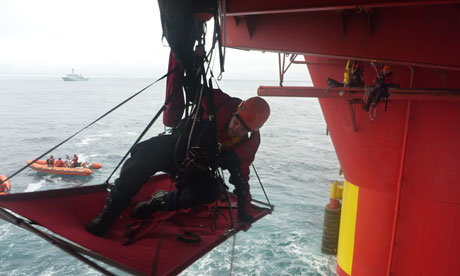
Greenpeace claims to have shut down offshore drilling by a British oil company at a controversial site in the Artic after four climbers began an occupation of the rig just after dawn.

The environment campaigners said the four protesters evaded a small flotilla of armed Danish navy and police boats which have been guarding the rigs in Baffin Bay off Greenland since the Greenpeace protest ship Esperanza arrived last week. The rigs are operated by the Edinburgh-based oil exploration company Cairn Energy, which last week prompted world-wide alarm among environmentalists after disclosing it had found the first evidence of oil or gas deposits under the Artic.

Several multinational oil companies, including Exxon. Chevron and Shell, are waiting for permission from Greenland to begin deep sea drilling in the Arctic's pristine waters.

Campaigners claim this led to a dangerous rush to exploit one of the world's last major untapped reserves in one of its most fragile locations. The US Geological Survey last year estimated there may be 90bn barrels of oil and 50tn cubic metres of gas across the Arctic.

The campaign group said: "At dawn this morning our expert climbers in inflatable speed boats dodged Danish Navy commandos before climbing up the inside of the rig and hanging from it in tents suspended from ropes, halting its drilling operation.
"The climbers have enough supplies to occupy the hanging tents for several days. If they succeed in stopping drilling for just a short time then the operators, Britain's Cairn Energy, will struggle to meet a tight deadline to complete the exploration before winter ice conditions force it to abandon the search for oil off Greenland until next year."

The occupation comes after a nine-day stand-off between Greenpeace and the Danish navy, which has sent its frigate Vaedderen to the area, deploying elite Danish commandos on high-speed boats to patrol a 500m exclusion zone around the rigs.
Last week the Danes warned the Esperanza it would be forcibly boarded and its captain arrested if it breached the security zone. After Greenpeace launched its helicopter to take photographs, the security area was extended to include a 1,800m high air exclusion zone.

Greenpeace argues that the Arctic drilling programme is extremely perilous because of the sea ice and intense weather conditions in the region, and claims it is one of the 10 most dangerous drilling sites in the world. The Baffin Bay area is known as "iceberg alley". Last week, it filmed a support vessel trying to break up an iceberg using high pressure hoses.

It says the risks posed by this operation go "far beyond" the Deepwater Horizon oil disaster in the Gulf of Mexico; in the Arctic an oil spill would destroy the region's vulnerable and untouched habitats, while the cold water would prevent any oil from quickly breaking up. Any emergency operation to tackle a disaster would encounter huge technical and logistical problems in such a remote area.
Cairn Energy argues it is there at Greenland's invitation, to help bolster and strengthen the island's economy. It also insisted its drilling operations obeyed some of the world's strictest environmental and safety regulations. "We've put procedures in place to give the highest possible priority to safety and environmental protection," it said.

It emerged last week that BP had withdrawn from applying to join in the Greenland oil exploration programme, a direct consequence of the Deepwater Horizon disaster.
Sim McKenna, one of the Greenpeace climbers on board the Cairn rig, said: "We've got to keep the energy companies out of the Arctic and kick our addiction to oil, that's why we're going to stop this rig from drilling for as long as we can.
"The BP Gulf oil disaster showed us it's time to go beyond oil. The drilling rig we're hanging off could spark an Arctic oil rush, one that would pose a huge threat to the climate and put this fragile environment at risk."

Morten Nielsen, deputy head of Greenland police, said the four protesters would be arrested and prosecuted. "The position of the Greenlandic police is that this is a clear violation of the law, the penal code of Greenland. The perpetrators will be prosecuted by the Greenlandic authorities," he said.

"But what we intend to do, how and when, is an operational detail it wouldn't be smart to advise Greenpeace about." Speaking from the island's capital, Nuuk, Nielsen confirmed that the police had rescue vessels close by the protesters in case any fell into the water, which was only a few degrees above freezing. He denied the police and navy had been outwitted by the protesters setting off at dawn.

"We have to evaluate the downside of any interception," he said. "The highest value we have to preserve is life and if the result of intercepting the Greenpeace activists would bring the police or for that matter the activists' lives in jeopardy, we are not going to intercept right now."

Wednesday, September 1, 2010

Are our toilet habits affecting the environment?

It is estimated that in our lifetime we spend up to three years on the loo, using an average of 110 rolls each year, but new research has delved deeper to uncover the toilet habits of the nation.

The survey looked at everything from technique to differences between the sexes, but one of the biggest questions dividing the people in the survey was "Do you scrunch or fold the loo roll?". According to the research, 68% fold their toilet paper before wiping and only 15% of us scrunch it.

And the results backed up the traditional belief that women are more likely to scrunch while men are more likely to fold, but only by a bit; one fifth of women admitted to scrunching their toilet paper compared to 10% of men, whereas three quarters of men admitted to folding against 63% of women.

Age is also an interesting factor, as the results showed that the older a person gets the more likely they are to fold their loo roll - which could come down to them having a little more time to spend a penny.

Only 57% of 18 to 24-year-olds admit to folding before wiping, whereas three quarters of those over 55-years-old claim to do the same thing. Meanwhile, men like to have something to read on the loo, 59% compared to just 43% of women. The reading material of choice is newspapers (45%), books (33%) and magazines (46%) ,whereas some of us are more high-tech reading mobile text messages (21%), internet pages on phones or laptops (17%) with others simply looking to take life less seriously, as 4% read joke books.

When it comes to waste, women are worse than men as 86% use up to 15 sheets of toilet roll every time they go to the toilet compared to 74% of men. However, 3% of men do admit to using over 25 sheets per visit which would be sure to block most toilets as well as being a complete waste and bad for the environment.
Many of those aged between 25 and 34-years-old are clearly still mummy and daddy's little angel, as 12% admitted that their parents still purchase their toilet roll for them.

And girls who live with their boyfriend should watch their supply, as the research shows 0% of boyfriends will replenish the stock if it runs out.(hmmm one can wonder what they will do if the girlfriend doesn't buy new stock!!!)

Monday, August 30, 2010

Illegal trade: Tiger cub found in luggage

A two-month old tiger cub was found sedated and hidden among stuffed-tiger toys in the luggage of a woman at Bangkok’s Suvarnabhumi International Airport on Sunday.

The 31-year old Thai national was scheduled to board a Mahan Air flight destined for Iran when she had trouble checking in her oversized bag. Airports of Thailand (AOT) staff suspected something amiss when they scanned the bag and x-ray images showed an item resembling a real cat. Officers from the Livestock Development Department and the National Parks, Wildlife and Plant Conservation Department were then called in to open the bag for inspection and discovered the tranquilized cub.

Investigations are underway to determine if the cub was wild caught or captive-bred, where it came from and the suspect’s intended final destination.

Tiger populations in Thailand and throughout Asia are critically threatened by poaching and trade to meet the international demand for tiger parts, products and, as illustrated in this case, live tigers.

Tigers are categorized as Endangered species by the International Union for Conservation of Nature (IUCN Red List of Threatened Species) and listed under Appendix I of the Convention on International Trade in Endangered Species of Wild Fauna and Flora (CITES) prohibiting international commercial trade. Both captive and wild caught tigers fall under the same regulations.

I really don't understand what makes people pay unrealistic sums of money for endangered animals, ignoring the fact that is so important to keep the animals in their natural habitats or sanctuaries where the possibity of breeding excists.

Sunday, August 29, 2010

Non-stick pans can affect our hormones, new research suggests

Norwegian study highlights the effects of PFC and PCB chemicals on human health.

A group of chemicals found in common household items may be having dangerous effects on our hormones, new research suggests. A study on sheep and cells grown in the laboratory by Norwegian vets found that perfluorinated compounds (PFCs) found in water resistant clothes and non-stick frying pans can affect the body's steroid hormones including oestrogen, testosterone and cortisol. These hormones are necessary for regulating a number of bodily functions in humans and animals, including our ability to reproduce.

The research also discovered similar effects caused by polychlorinated biphenyls (PCBs), a group of chemicals that have been banned since the 1970s but continue to persist in the environment.

Limit exposure

Study author Dr. Marianne Kraugerud, from the Norwegian School of Veterinary Science, said consumers could limit their exposure to both chemicals.
'To regulate uptake of PFCs, one could try to limit the use of clothes treated with water and grease repellent containing PFCs.

'It may also be wise to use cookware coated with non-stick "Teflon"-type coatings with care, especially when damaged. Alternatively, one may consider going back to the good old-fashioned cast iron frying pan,' she said.

Saturday, August 28, 2010

Can you make your pet go green???

Cats and dogs may not be immediately concerned with saving the Earth, but today's owners should find themselves engaging in green responsibility and choosing biodegradable/eco-friendly pet products. Going green isn't just for people.

Dogs as well as dog owners can help protect the environment we all share. In America alone there were 74.8 million dogs listed in 2008. That many dogs can make a significant impact on the environment. It only makes sense that pet owners include their furry family members in lifestyle changes that protect health and the planet we live on.

Small changes can add up and here are a few tips on how you can have your pet go green:
• Adopt pets from a shelter. Those who want a specific breed can find just what they're looking for at a breed rescue.
• Pick up after your dog, using paper or biodegradable poop bags. Never use plastic, which does not break down in the landfill.
• Feed dogs organic pet food that is free of hormones and chemicals that may be toxic to the canine body.
• Recycle household materials for bedding. Some of the family's old blankets or towels work well as do old pillow slips stuffed with foam packaging peanuts.
• Pay attention to packaging of pet items. Recycled, biodegradable, or none is best.
• Use shampoos and other grooming products that are free of phosphates, sulfates, and other chemicals that can be harmful to the environment.

It might be hard for you to find the environmentally friendly pet products in your community. But how about asking your local pet shop, if they would consider taking the products in? If enought customers ask, I am sure they will give in to the pressure :-)

Wednesday, August 25, 2010

Ecotourism in an ancient rainforest

Taman Negara National Park spans more than 2,500 square miles and is the oldest officially protected area in Malaysia. It is also Malaysia's largest national park and has been developed into a major destination for ecotourism.

Watch, as the BBC's Carmen Roberts takes us on a journey into a pristine rainforest that is over 130 million years old.

Monday, August 23, 2010

"Goody" bag companies accused of being "fake green"

ACCC (the Australian Competition and Consumer Commission) has instituted legal proceedings against Goody Environment Pty Ltd and Nupak Australia Pty Ltd.

The ACCC alleged that the companies engaged in misleading and deceptive conduct and made false representations regarding 'Goody' brand plastic bags, in contravention of the Trade Practices Act 1974. The action concerns alleged representations by Goody Environment and Nupak that 'Goody' brand plastic bags, containing an additive supplied by Goody Environment and distributed by Nupak, were biodegradable and compostable in accordance with the Australian Standard AS4736-2006 for Biodegradable plastics suitable for composting and other Microbial Treatment and could be legally supplied in South Australia.

The ACCC alleged that these 'Goody' brand plastic bags did not satisfy the Australian Standard's requirements as to biodegradability, disintegration and concentration of toxic or hazardous substances.
The ACCC seeked orders including:
• corrective advertising by Goody Environment and Nupak on their websites and in newspapers
• the publication by Goody Environment of a notice in a relevant magazine informing the public of the court orders
• letters to be sent by Nupak to its customers advising of the court orders
• the implementation of a trade practices law compliance and education training program by Goody Environment and Nupak
• findings of fact
• declarations that Goody Environment and Nupak contravened the Act
• injunctions including interim injunctions to restrain Goody Environment and Nupak from continuing to make these representations, and
• ACCC's costs.

The directions hearing was in Adelaide on the 15th of July and in response, Nupak has undertaken to refrain from making representations to the effect that 'Goody' plastic bags:
a. comply with the Australian Standard*;
b. comply with the requirements of State Legislation which proscribes the sale of plastic 'singlet' shopping bags; or
c. are biodegradable or compostable in accordance with the Australian Standard,
unless Nupak has first obtained independent scientific testing which substantiates such representations.

Nupak has also undertaken to send a letter to each Nupak customer supplied with Goody plastic bags informing them of the ACCC's action, the allegations and the undertakings by Nupak. The hearing of the ACCC's application for interlocutory relief against Goody Environment has been set down for 23 August 2010.

Friday, August 20, 2010

Australia corals to light up cancer cure fight

Australian scientists have discovered a cluster of brilliant shallow-water corals that could help in the search for anti-cancer drugs and to understand global warming, a researcher said Saturday.

The vividly fluorescent cluster was found in waters off Lord Howe Island, 600 kilometres (400 miles) east of the Australian mainland, with some displaying rich reds that were difficult to find and in high demand for studies of cancer cells, researcher Anya Salih said.

"The underwater buttresses and caverns are densely inhabited by hundreds of corals, all deeply pigmented by the most intense green, blue and many with red fluorescence," she said.

Salih said she had never seen such an abundance of highly red fluorescent corals, nor such an extraordinarily vibrant site.

"We are using these pigments to light up the workings of living cells and to study what goes wrong in cancer cells," said Salih, from the University of Western Sydney.

The gene producing the particular pigment -- red, green, blue or yellow -- would be attached to a molecule in both healthy and cancerous cells, and would enable scientists to track cell growth and change using a special fluorescent-sensitive laser microscope.

Salih is working with scientists from the University of California to explore how cancer cells differ from normal cells and how effective anti-cancer drugs are. She said red pigments were especially valuable because they allowed researchers to see deeper into tissues.

"These fluorescent molecules are transforming cell science and biomedical research," said Salih.

The corals were discovered by scientists tracking the recovery of coral bleaching linked to global warming at Lord Howe Island, and Salih said they were invaluable not only for her research but for understanding climate change.

"Earlier this year, the coral reefs of Lord Howe Island experienced a sudden mass bleaching event caused by warming of seawater. It's a sign that global warming is beginning to be a threat to coral survival even to the most southern reefs in Australia," she said.

But the fluorescent corals had been much less damaged by the bleaching, lending "support to the hypothesis that fluorescence can provide some level of protection to corals from temperature stresses due to climate change."

"Coral fluorescence is proving to be incredibly important in the biology of coral reefs and their ability to survive stressful conditions," she said.

Saturday, August 14, 2010

Is there such a thing as "fake green"??

In my work related research I have come across a very large number of business that declare themselves green or environmentally concious in their corporate social responsibility policy.

As a consumer it can be very hard to see through the smokescreen of a company's marketing strategy and figure out which companies are dedicated the reducing their carbon footprint and which companies are using a few green iniatives to attract the modern green consumer. Eco-friendly doesn't mean anything unfortunately marketers have figured out that people are willing to pay a premium, a little more, if it says eco on it. So sometimes it does even though it may not be eco-friendly at all.

I've seen companies using "supporter of Earth Hour" to promote their green iniatives. Excuse me!!! Swithcing off the lights for ONE HOUR every year does not make your company green. It's this kind of companies, I call "fake green". They support a public green initiative and use it as proof of their green-ness. Don't let this easy bought green initiatives fool you!!

There is actually an official term for the concept: Greenwashing: It’s greenwashing when a company or organisation spends more time and money claiming to be “green” through advertising and marketing than actually implementing business practices that minimise environmental impact.

Make sure you look carefully next time you decide to buy green products. Spend some time researching the different companies before you make decide on the brand. There is plenty information available online - enough to enable you to make an informed decision!

Friday, August 13, 2010

Climate change will increase number of heart deaths

Climate change means a lot more than just rising water levels and the fact that we have to adjust to warmer weather. There is a lot more at stake, and now a new study shows that climate change will increase our health quite extremely.

Many more people will die of heart problems as global warming continues, experts are warning. Cllmate extremes of hot and cold will become more common and this will puts strain on people's hearts, doctors say. A study in the British Medical Journal found that each 1C temperature drop on a single day in the UK is linked to 200 extra heart attacks.

Heatwaves, meanwhile, increase heart deaths from other causes, as shown by the events in Paris during summer 2003. Over 11,000 people died in France's heatwave in the first half of August of that year when temperatures rose to over 40C. Many of these were sudden cardiac deaths related to heart conditions other than heart attack. That same summer, record-breaking temperatures led to 2,000 excess deaths in the UK. And experts predict that by the 2080s events similar to these will happen every year. The risks posed by extreme spells of hot and cold are largely within two weeks of exposure and are greatest for the most frail - the elderly and those with heart problems already, say experts.

Thursday, August 12, 2010

Surprising sustainable food outlets

When you think of sustainable dining, you probably don't think of fast-food restaurants like Subway and McDonalds. And yet, these fast-food chains are some of the few who have successfully pursued LEED certification.

LEED stands for Leadership in Energy and Environmental Design and is an internationally recognized third-party certification that a building meets high standards for energy savings, water efficiency, emissions reduction and improved environmental quality.

So far, only 38 restaurants have received LEED certification -- 40% of those are chain restaurants. For many of these large chain organizations, LEED certification is a relatively cost-efficient way for not particularly green companies to flex their corporate social responsiblity muscles.

It appears the big chains are taking a small step in the right direction: Subway currently has one LEED certified restaurant in Chapel Hill, NC. "We believe that building stores in an environmentally responsible way is a good business practice," says Subway's public relations specialist Les Winograd.

McDonald's boasts two LEED-certified locations in Chicago, IL, and Cary, NC. "McDonald's is a great example of a company which, like many other organizations in the past few years, has implemented corporate social responsibility, including concern for the environment," says Marie Coleman of the U.S. Green Buildings Council. But two LEED-certified stores doesn't get them off the hook for the wastefulness, environmental pollution and massive deforestation they contribute to in order to develop monoculture plantations.

Saturday, August 7, 2010

Demand for shark fin soup has led to illegalities

The Asian demand for shark fin soup has led to illegal killing of nearly 300,000 sharks off Brazil, an environmental group alleges.

The Environmental Justice Institute in Brazil has accused a seafood exporter, Siglo do Brasil Comercio, of illegally killing sharks and is suing for what it calls massive damage to the marine ecosystem.

The group is suing the company for $790 million in damages for its alleged sale of 290,000 sharks since 2009.

Many of the sharks were thrown back into the sea after their fins were taken for clandestine export, the group charges. "As we can't put a value on life, we have calculated the impact on the ecosystem," group director Cristiano Pacheco said.

"We think the shark fins were exported clandestinely, in containers, likely from the ports of Rio Grande do Sul to the Asian market," he said.

It is illegal to separate shark fins from carcasses in Brazil, but the high value placed by Asian diners on the fins has encouraged the illicit practice. Between 26 and 73 million sharks are killed annually world wide for their fins to produce the high-end delicacy.

Once again I have to make my plead: Please keeps sharks in the oceans and out of the soup!!!!!

Thursday, August 5, 2010

US billionaires pledge 50% of their wealth to charity

Thirty-eight US billionaires have pledged at least 50% of their wealth to charity through a campaign started by investor Warren Buffett and Microsoft founder Bill Gates. They include New York Mayor Michael Bloomberg, CNN founder Ted Turner and entertainment executive Barry Diller.

"The Giving Pledge" lists all the families and individuals who have committed to the project. The site says the pledge is a "moral commitment" not a "legal contract".

Who are the billionaire philanthropists?

The campaign was started in June to convince US billionaires to give away at least half of their fortunes either during their lifetimes or after their deaths. "We've really just started but already we've had a terrific response," Mr Buffett said in a statement. He added: "The Giving Pledge is about asking wealthy families to have important conversations about their wealth and how it will be used."

Those who pledge their money to "philanthropic causes and charitable organisations" must publicly state their intention through a letter of explanation.

Other billionaires who have pledged large sums of their money include film producer George Lucas, philanthropist David Rockefeller and oil investor T Boone Pickens. "I am dedicating the majority of my wealth to improving education. It is the key to the survival of the human race," Mr Lucas wrote in his Giving Pledge letter.

The organisation says many of the donors have committed to donating sums far greater than the 50% minimum level. "While the Giving Pledge is specifically focused on billionaires, the idea takes its inspiration from efforts in the past and at present that encourage and recognize givers of all financial means and backgrounds," says Givingpledge.org.

Mr Buffett along with Mr Gates and his wife, Melinda, held numerous dinners with US billionaires in the past year to promote the campaign and urge America's financial elite to pledge.

Mr Buffett, the chief executive of the investment firm Berkshire Hathaway, pledged 99% of his money to the Bill & Melinda Gates Foundation and family charities in 2006. Forbes Magazine estimated Mr Buffett's wealth at $47bn (£29bn) in March. Bill Gates, who Forbes rates as the world's second wealthiest person, has also given away more than $28bn to his foundation.

There are 403 billionaires living in the US, according to Forbes.

Wednesday, August 4, 2010

I get by with a little help from my friends

Study finds being sociable is good for your health, while loneliness is as bad for you as smoking 15 cigarettes a day.

A life of booze, fags and slothfulness may be enough to earn your doctor's disapproval, but there is one last hope: a repeat prescription of mates and good conversation.

A circle of close friends and strong family ties can boost a person's health more than exercise, losing weight or quitting cigarettes and alcohol, psychologists say.
Sociable people seem to reap extra rewards from their relationships by feeling less stressed, taking better care of themselves and having less risky lifestyles than those who are more isolated, they claim.

Being lonely and isolated is as bad for a person's health as smoking 15 cigarettes a day or being an alcoholic. It is as harmful as not exercising and twice as bad for the health as being obese.

If this is true, imagine what a visit at your elderly relatives can do, not only for their quality of life, but also for their health... It might be worth planning an extra visit this month, if you want them to stick around as long as possible :-)

Friday, July 30, 2010

5 reasons not to drink bottled water

In 2009 there was sold 73 million litres of bottled water in Singapore alone, which gives roughly150 mio plastic water bottles to dispose.

And why even buy bottled water in Singapore? With the tap water being as clean as water can be, there is no good excuse to buy the bottled version.

Here are 5 reasons why NOT to buy bottled water:

1) Bottled water isn't a good value
Branded bottled water is sold from vending machines at the same price as soft drinks. Branded bottled water is essentially filtered tap water, bottled close to their distribution point. Most municipal water costs less than 1 cent per 10 liters.

2) No healthier than tap water
While public safety groups correctly point out that many municipal water systems are aging and there remain hundreds of chemical contaminants for which no standards have been established, there's very little empirical evidence that suggests bottled water is any cleaner or better for you than its tap equivalent.

3) Bottled water means garbage
The plastic used to bottle beverages is of high quality and in demand by recyclers, However, over 80 percent of plastic bottles are simply thrown away.

That assumes empty bottles actually make it to a garbage can. Plastic waste is now at such a volume that vast eddies of current-bound plastic trash now spin endlessly in the world's major oceans. This represents a great risk to marine life, killing birds and fish which mistake our garbage for food.

Thanks to its slow decay rate, the vast majority of all plastics ever produced still exist — somewhere.

4) Bottled water means less attention to public systems
Many people drink bottled water because they don't like the taste of their local tap water, or because they question its safety.

This is like running around with a slow leak in your tire, topping it off every few days rather than taking it to be patched. Only the very affluent can afford to switch their water consumption to bottled sources. Once distanced from public systems, these consumers have little incentive to support bond issues and other methods of upgrading municipal water treatment.

5) The corporatization of water
Water is being called the "Blue Gold" of the 21st century. Thanks to increasing urbanization and population, shifting climates and industrial pollution, fresh water is becoming humanity's most precious resource.

Multinational corporations are stepping in to purchase groundwater and distribution rights wherever they can, and the bottled water industry is an important component in their drive to commoditize what many feel is a basic human right: the access to safe and affordable water.

What can you do?
There's a simple alternative to bottled water: buy a stainless steel thermos, and use it. Don't like the way your local tap water tastes? Inexpensive carbon filters will turn most tap water sparkling fresh at a fraction of bottled water's cost.

Thursday, July 29, 2010

Green Cleaners' clients are helping to save Indonesian Rainforests!

As part of Green Cleaners commitment to help support environmental projects in Asia - USD$1 from every Green Home Cleaning Appointment will go towards www.rainforestrescue.org.au.

Their Indonesian project protects habitat for the endangered Orangutan in Sumatra by preventing illegal logging and clearing. The projects employs staff to patrol National Park boundaries and supports local communities in developing a livelihood that benefits from conservation.

Buy1GIVE1 - Transaction Based Giving

We thank you for your continued support!

Tuesday, July 27, 2010

Swiss-based multinational company found guilty of exporting toxic waste

A Dutch court has found multinational Trafigura guilty of illegally exporting toxic waste from Amsterdam and concealing the nature of the cargo.

Trafigura is one of the largest independent companies trading commodities today. They are involved in the sourcing and trading of crude oil, petroleum products, renewable energies, metals, metal ores and concentrates for industrial consumers
In 2006, Trafigura transported waste alleged to have been involved in the injury of thousands of people in Ivory Coast. Trafigura denied any wrongdoing.It expressed disappointment in the ruling and is considering an appeal. The firm was fined 1m euros (£836,894) for its ship, the Probo Koala, transiting Amsterdam with its cargo. The ship then went on to unload its cargo in Ivory Coast.

Trafigura employee Naeem Ahmed, who was involved in the ship's operation in Amsterdam, was fined 25,000 euros and the captain of the Probo Koala, 46-year-old Sergiy Chertov, was sentenced to a five-year suspended jail term.
This is the first time Trafigura has faced criminal charges since the toxic waste scandal unfolded in Ivory Coast's commercial capital, Abidjan, in 2006.
Trafigura initially tried to clean up low-grade oil by tipping caustic soda into the hold of the Probo Koala. The company tried to unload the waste in Amsterdam for treatment, declaring it as "harmless slops".

When the treatment company came back with a higher price for cleaning the waste, the cargo was shipped to Africa where it ended up in Abidjan to be handled at a much lower rate. Presiding Judge Frans Bauduin said: "Trafigura - which by that time knew of the exact composition [of the waste] - should never have agreed to its processing at such a price."

Monday, July 26, 2010

Is your wooden furniture illegal??

Around 1/3 of all wooden furniture are made from wood illegally logged around the world. Illegal logging is a major culprit for the increasing destruction of precious tropical forests and takes away a valuable source of income from local communities.

Indonesia is now the world’s third-biggest emitter of greenhouse gases, mostly thanks to deforestation and degradation. The deforestation has huge impact on the local communities.For generations villagers have extracted and sold honey and nilam plant oil – used as cooking oil and to make cosmetics. But most have had to find a secondary source of income as resources run thin.

In addition to depleting resources for forest-dependent communities, deforestation is contributing to an increase in small-scale natural disasters. Flooding has become more common in the last five years, and the water level is rising leaving many houses damaged beyond repair. Furthermore, animals forced out of their natural habitat by deforestation are wreaking havoc in the village. Thousands of pigs are destroying the crops in the local villages.

In Europe The European Parliament has voted overwhelmingly in support of a new law to ban illegal timber imports to the EU. The Parliament voted 644-25 to prohibit the sale and import of illegally harvested timber and products made from it. The law is aimed at the large trade in natural forest timber from the developing world’s forest-rich countries. The ban is set to come into effect in two years. It must still be endorsed by the EU member governments but this is seen as a formality. Under the new rules, European importers of timber and wood products will have to prove the legality of their goods and provide tracking records back to origin.

There is only one way to stop the illegal logging, and that is to check next time you buy wooden furniture. If the legality of the wood cannot be accounted for then DON'T BUY!

Thursday, July 22, 2010

Does bathroom cleaner cause cancer??

Scientists claim the risk of breast cancer is doubled by the overuse of air fresheners and cleaning products that combat mould and mildew. Astonishing research claims that the perfect housewives with spotless bathrooms could be twice as likely to get breast cancer.

The amazing findings - which may even be linked to a bizarre combination of the two - emerged in a huge US study.

Breast cancer researchers for the American Silent Spring Institute quizzed more than 1,500 women about what kind of cleaning products they used - and how often.

Many were housewives waging a constant battle against bathroom mould and the build-up of mildew on windows - while at the same time trying to keep homes smelling fresh.
The institute's Julia Brody said: "Women who reported the highest combined cleaning product use had a doubled risk of breast cancer compared to those with the lowest reported use. "Use of air fresheners and products for mould and mildew control were associated with increased risk."

Insect repellents also boosted the chance of getting the disease - although there appeared to be little linking it to pesticides. The institute urged further urgent research.

If this is indeed right many of us women are at high risk because of external influences from our household. A way to minimise the risk is to use non-toxic cleaning products. Have a look here for our range of Green Home Cleaning Kits online.

Sunday, July 18, 2010

Pentagon turns green to cut fuel bill

THE US military has been told to go green to cut costs after the Pentagon's annual fuel bill hit $US20 billion. The biggest energy-saving campaign by the Pentagon is forcing the armed services to look at alternative ways of powering aircrafts, ships and armoured vehicles. Algae, vegetable oil and even animal fat are coming to the rescue.

First in the line of the accountants' fire is the Air Force. Fighter aircraft use up 3,000 to 5,000 gallons of fuel on an average mission - at the current price of $2.18 a gallon. The Air Force's transport service, which ferries troops and cargo around the world, is the largest fuel-guzzling organisation on the planet.

The US Navy is planning to have a green carrier strike force by 2016, with every aircraft on board and all the escort ships being powered by a 50-50 mix of petrol and biofuel. The carriers are nuclear-powered "so that's already alternative", Admiral Philip Cullom, the head of the Navy's Task Force Energy, said.

In April the US Navy showed off a Green Hornet, a FA18 that has completed more than a dozen flights with half of the fuel tank containing an oil extracted from camelina, a member of the mustard family.

"When I spoke to the pilots they said they didn't know whether they had petroleum or biofuel ... it flew just the same," Admiral Cullom said. He plans to use the equivalent of eight million barrels of biofuel by 2020.

Jeff Braun, the director of the US Air Force alternative fuels certification office, said that on August 26 a C17 transport aircraft would attempt to fly on tallow (animal fat) fuel. "What's left over from the meat process is what we call yellow grease and you extract the oil from it," he said.

Alan Shaffer, the Pentagon's principal deputy director of defence research and engineering, said that an alternative oil source with potential was algae.
"The beauty with algae is that you can grow it anywhere and to grow it it needs to absorb carbon dioxide, so it's not only a very effective fuel, in theory it's also a carbon sink. That's a pretty good deal," he said. Mr Shaffer believes that with investment - the big airlines are interested - algae could take off.

Friday, July 16, 2010

Endangered species in traditional Chinese Medicine

While China uses Western medicines, it also still relies on the traditional medicines from complex recipes of plant and animal parts that date back some 3,000 years. Though the use of some animals, including tigers and rhinoceroses, is already illegal in China, demand remains strong and an underground market fed by smuggling continues to flourish.

As late as this week it was made public that customs officers in Guangdong, China, have seized more than 7.8 tonnes of frozen pangolins and 1,800 kg of pangolin scales from a fishing vessel after it was stopped for inspection at Zhuhai's Gaolan Island. Two of the four species are classified as Endangered by IUCN. (For the full article please go to: http://www.traffic.org/home/2010/7/13/huge-pangolin-seizure-in-china.html )

Traditional doctors in China have been substituting tiger and rhino parts for a long time because they have become so rare. One example: Bones of the sailong, a north China rat used in Tibetan medicine, are certified in China as a substitute for "Tiger Bone Wine," a famous tonic. It is said that any professional in the field of oriental herbal medicine would recognize that for every substance supplied by endangered species there are many effective substitutes.

Please promise me that next you buy your traditional Chinese medicine that you will check that it doesn't contain any ingredients from endangered species and help make a difference!!

Thursday, July 15, 2010

Increase the temperature = Decrease your utility bill

When you're in a tropical climate having the aircondition on indoors is almost a must for your comfort. However, cooling down your home with airconditioning is very likely to be a significant part of your utility bill. Not only is it very expensive to cool down your home but it also puts a strain on the worlds natural resources.

There are a few easy tips to decrease your home cooling expenditure and the most important one is to increase the temperature. It will save you up to 5% on your home cooling costs for each degree that you are able to raise your thermostat. So if you would normally put your airconditioning on at 18 degrees celcius imagine the change in you cost if you change the temperature to 23 degrees. Yes a 25% decrease in the cost of coolig down your home. Now imagine what you can do with all that money saved...

Here are another few easy tips to reduce your home cooling expenditure:- A dusty filter reduces air flow. Examine your unit's air filters once a month and clean or replace filters when necessary. Keeping your filters clean can cut energy consumption 5 to 15%.
- Minimise the area being cooled or heated by shutting doors to unused rooms
- If the machine has adjustable louvres, adjust them towards the ceiling when cooling, and towards the floor when heating (as cool air falls, hot air rises)

Tuesday, July 13, 2010

Keep sharks in the ocean and out of the soup!!

Sharks are in serious trouble. Many of the world's shark populations are in collapse. Some shark species have declined by more than 90 percent in the last two decades. International Union for Conservation of Nature (IUCN) scientists warn that one-third of open ocean sharks are threatened with extinction. Yet sharks continue to be fished faster than they can reproduce.

Every year tens of millions of sharks die a slow death because of finning. Finning is the inhumane practice of hacking off the shark's fins and throwing its still living body back into the sea. The sharks either starve to death, are eaten alive by other fish, or drown (if they are not in constant movement their gills cannot extract oxygen from the water). Shark fins are being "harvested" in ever greater numbers to feed the growing demand for shark fin soup, an Asian "delicacy".

Not only is this practice very cruel, but losing these top predators has devastating impacts on underwater ecosystems and local economies. Conservation hinges on effective shark finning bans, strict international fisheries management, reduction of consumer demand, increased shark research and protection of vital habitat.

So what can we as concerned global citizens do to prevent this slaughtering of sharks??

A cause has been started on facebook with the aim of stopping the sale of shark fin soup in Singapore. The aim is to persuade hotels and restaurants to stop selling shark fin soup by campaigning, boycotting and educating people about the dangers that finning poses, not only for sharks, but for the oceans and our own health.

The most efficient way to stop the restaurants selling shark fin soup is to just SAY NO!!!

Monday, July 12, 2010

Fight Climate Change with Diet Change

Global warming is one of the world's greatest challenges at the moment and according to scientists one of the most effective ways to fight global warming is to become vegetarian.

A UN report found that the meat industry produces more greenhouse gases than all the SUVs, cars, trucks, planes, and ships in the world combined.Greenhouse gases cause global warming, which studies show will increasingly lead to catastrophic disasters-like droughts, floods, hurricanes, rising sea levels, and disease outbreaks - unless we drastically reduce the amounts emitted into the atmosphere.

The official handbook for the Live Earth concerts says that "refusing meat"
is the "single most effective thing you can do to reduce your carbon footprint. Studies have shown that if every American replaced one meal of chicken per week with vegetarian foods, the carbon dioxide savings would be the same as taking more than a half-million cars off the roads. According to The University of Chicago that becoming a vegetarian is 50% more effective than switching to a hybrid car in reducing greenhouse gas emissions.

Did you know that eating half a kilo of meat emits just as much greenhouse gas as driving an SUV for 65 kilometers??

We Can Help Stop Global Warming Today


The most effective way to fight the global warming crisis is to stop eating meat, eggs, and dairy products. However for a meat lover like myself becoming a vegetarian might be a big task. So for now I will incorporate 2 meat free days pr week in my lifestyle. And well, if we all do that it will have a huge impact on our environment and the future of our Mother Earth.

Anyone want to join me on my quest to save the planet??

Thursday, June 3, 2010

G’day Mate!! Green Cleaners launches in Australia....

Green Cleaners is excited to announce the launch of our first office in Australia, with our first franchise in Sydney. If you have friends or family living there, you may wish to let them know and receive a 20% discount on their first appointment as a friends or family referral, just visit us at www.greencleanersaustralia.com.au for more information.


With our commitment to quality, healthy, eco friendly cleaning services remaining as strong as ever, we aim to soon be available in more major Australian cities too.... Indeed, with exciting franchise opportunities available throughout Australia, you may wish to join us as a franchisee – visit www.greencleaners.asia/franchise.asp for more details and a franchise prospectus today!

Launch of our new website!

Hello Friends!

It’s been a great few weeks for Green Cleaners and we’ve lots of exciting news to share! Firstly, we’re pleased to unveil our brand new website at www.greencleaners.asia

You’ll find all the information on our healthier residential cleaning services, our commercial green cleaning offerings, our online products shop and more interactive features and fun; with our client survey, online testimonials, media and news, gift certificates, social platforms and tips and awareness documents. Please feel free to leave us your feedback on our new website and as always all client feedback is most welcome and well appreciated :)